

0. Prologue: The Real Meaning of “Inaccurate”
When the Wall Street Journal recently reported SpaceX’s valuation at $800 billion, Elon Musk immediately drew a line, calling it “Inaccurate.” On February 2, 2026, the strategic rationale behind that statement became clear. SpaceX is not merely an $800 billion launch provider; it is evolving into a $1.25 trillion “Space AI Complex” combined with xAI.
As reported by Bloomberg and Reuters, the merger between SpaceX and xAI has been confirmed. This transaction represents more than a simple corporate combination. It marks the beginning of a massive infrastructure project aiming to address terrestrial power shortages and data center bottlenecks through the expanse of space.
1. The Cash Cow is Not Rockets, It’s Starlink
The financial backbone sustaining this massive entity is Starlink.
The Power of the Subscription Economy: While rocket launches are event-based revenue sources, Starlink serves as a cash cow with over 9 million subscribers (estimated as of January 2026) generating a consistent inflow of monthly subscription fees.
Virtuous Cycle of Capital: This substantial cash flow is no longer just funding the next-generation Starship launch vehicle; it is now likely being redirected into AI infrastructure investment to support the integration with xAI. Starlink’s success effectively fuels xAI’s deployment into orbit.
2. Technical Analysis 1: The Backbone of Space Internet, ‘Laser Link (OISL)’
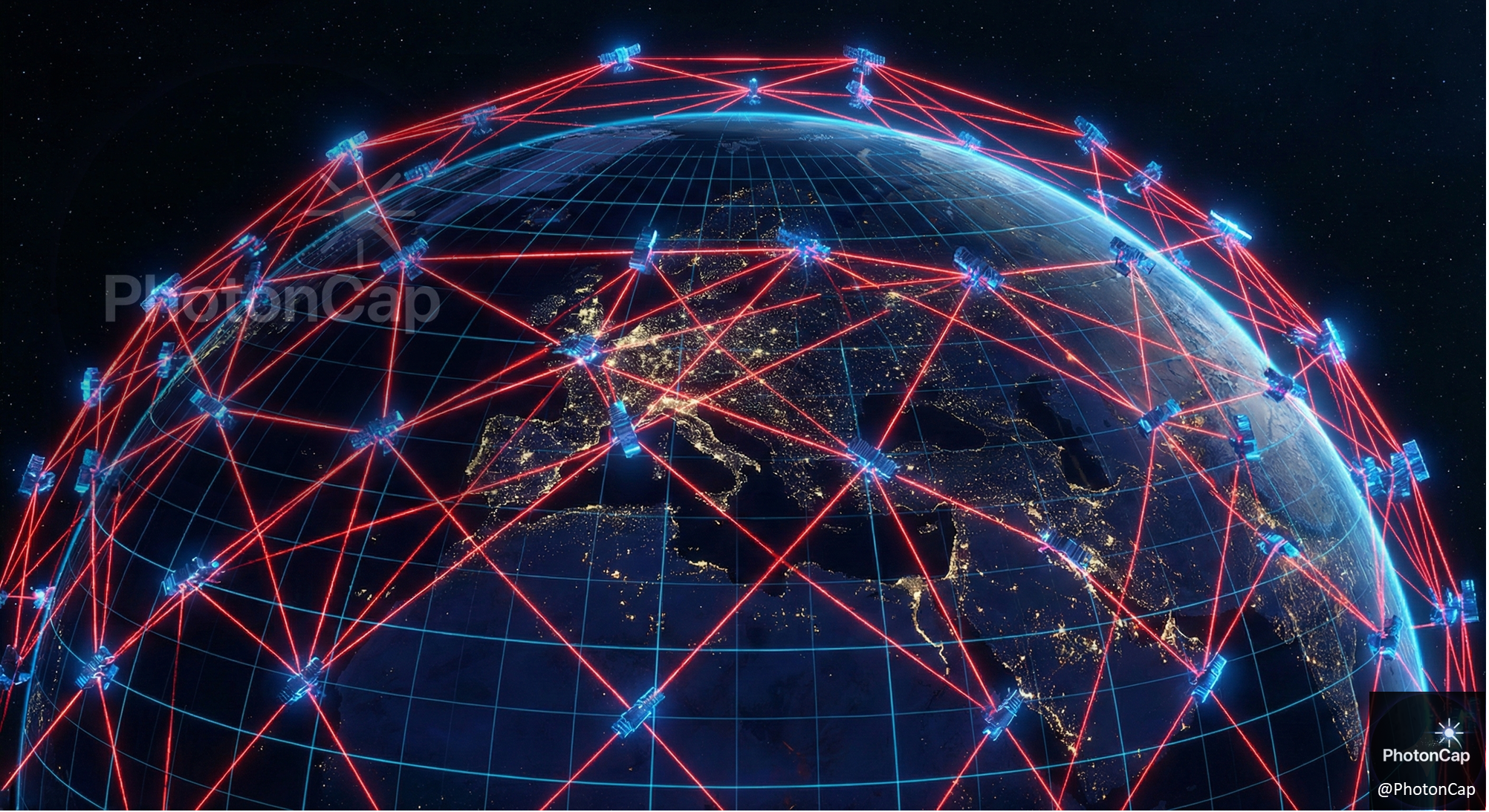
The primary technical moat where Starlink distinguishes itself from competitors like OneWeb or Amazon Kuiper is its Optical Inter-Satellite Links (OISL).
Unlike legacy satellite communications that rely on ground station relays, Starlink satellites utilize lasers to exchange data in space. In the vacuum of space, light travels approximately 30% faster than through terrestrial glass fibers. This results in a 20–40% reduction in global communication latency—a critical advantage for high-frequency trading and military operations.
A key technical question follows: which wavelength is being used?
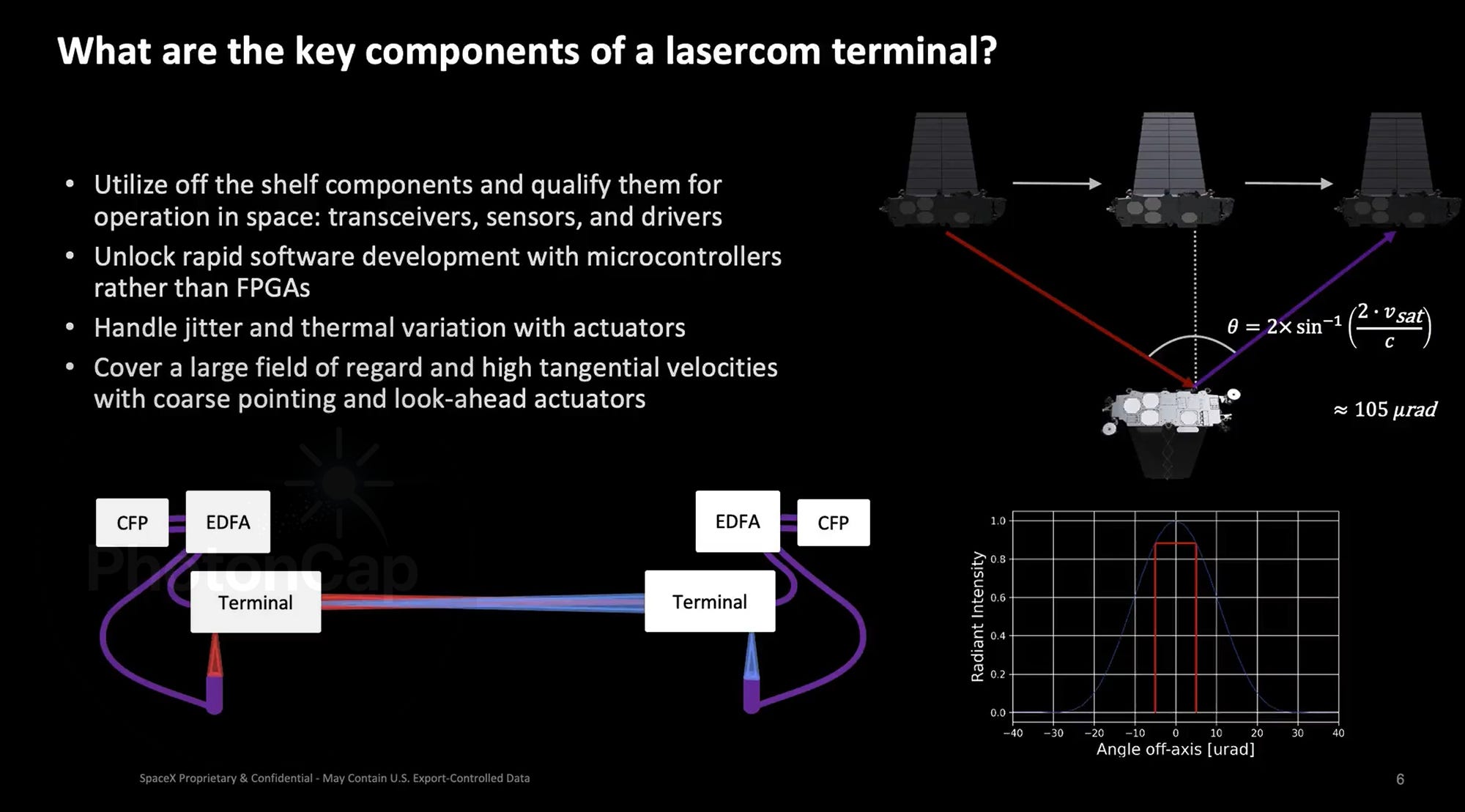
Recent SpaceX conference materials (SPIE Photonics West) indicated the inclusion of EDFA (Erbium-Doped Fiber Amplifier). This serves as a strong technical indicator that Starlink is utilizing the 1550nm wavelength band. When considering factors such as eye-safety, atmospheric absorption, and the availability of space-grade components, the 1550nm band offers comprehensive advantages over alternatives like 1064nm or 850nm.
However, something happened recently that turned my hypothesis into a firm conviction. A few days ago, while reviewing the job alerts I had set up for SpaceX, I captured a remarkable shift. Positions related to Photonics and Optics, which were rare just a few weeks ago, have surged in number. Upon dissecting the details of these Job Descriptions (JDs), I found them to be chillingly consistent with my predictions. This is a decisive signal that SpaceX has internally begun full-scale mobilization of its human infrastructure to build a ‘Space Optical Network.’”
