1. Introduction: The Announcement and the Market’s Reaction
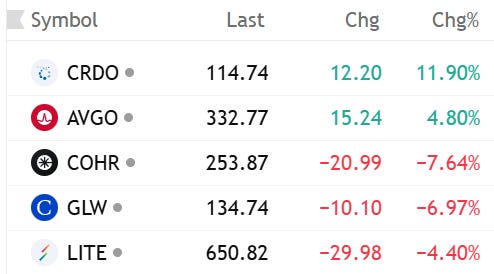
In early March 2026, NVIDIA announced a strategic partnership involving a combined $4 billion investment — $2 billion each — in two global leaders in photonics: Coherent Corp. and Lumentum Holdings. This was far more than a passive equity stake. The deal directly funds R&D and domestic U.S. manufacturing expansion at both companies, and includes multi-year commitments to purchase optical components at scale.
The Market’s Immediate Reaction
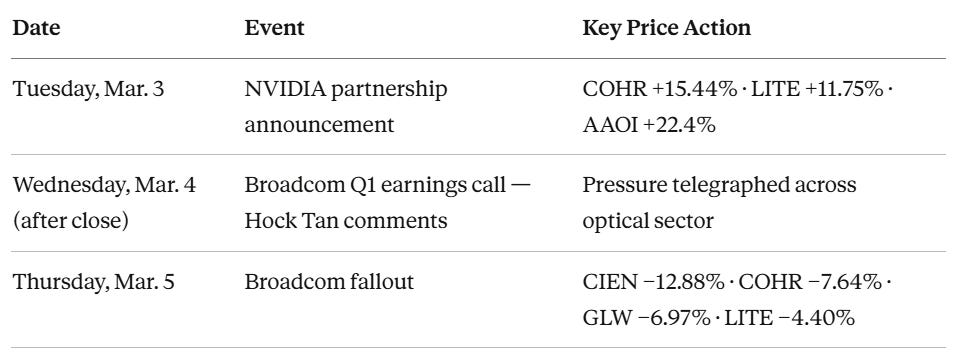
On the Broadcom earnings call, CEO Hock Tan said:
““We can do it with copper, and we can push the envelope from 100G to 200G to even 400,” Tan added. “We have SerDes now running 400G that can drive distance on a rack to run copper. What all I’m trying to say is you don’t need to go run into some bright shiny objects called CPOs, even as we are the lead in CPOs. CPOs will come in its time, not this year, maybe not next year, but in its time.”
The market immediately framed this as a battle: who’s right? Is the age of optics here, or can copper hold on longer? But that framing was completely wrong. Both companies were right — they were just solving different problems. The market missed this crucial distinction entirely.
2. Start with the Physics: Why the “Copper Cliff” Is Real
For decades, copper cables handled communication inside data centers. They were cheap, simple, and perfectly adequate at smaller scales. But the AI era broke that equation. Physics stepped in and said no.
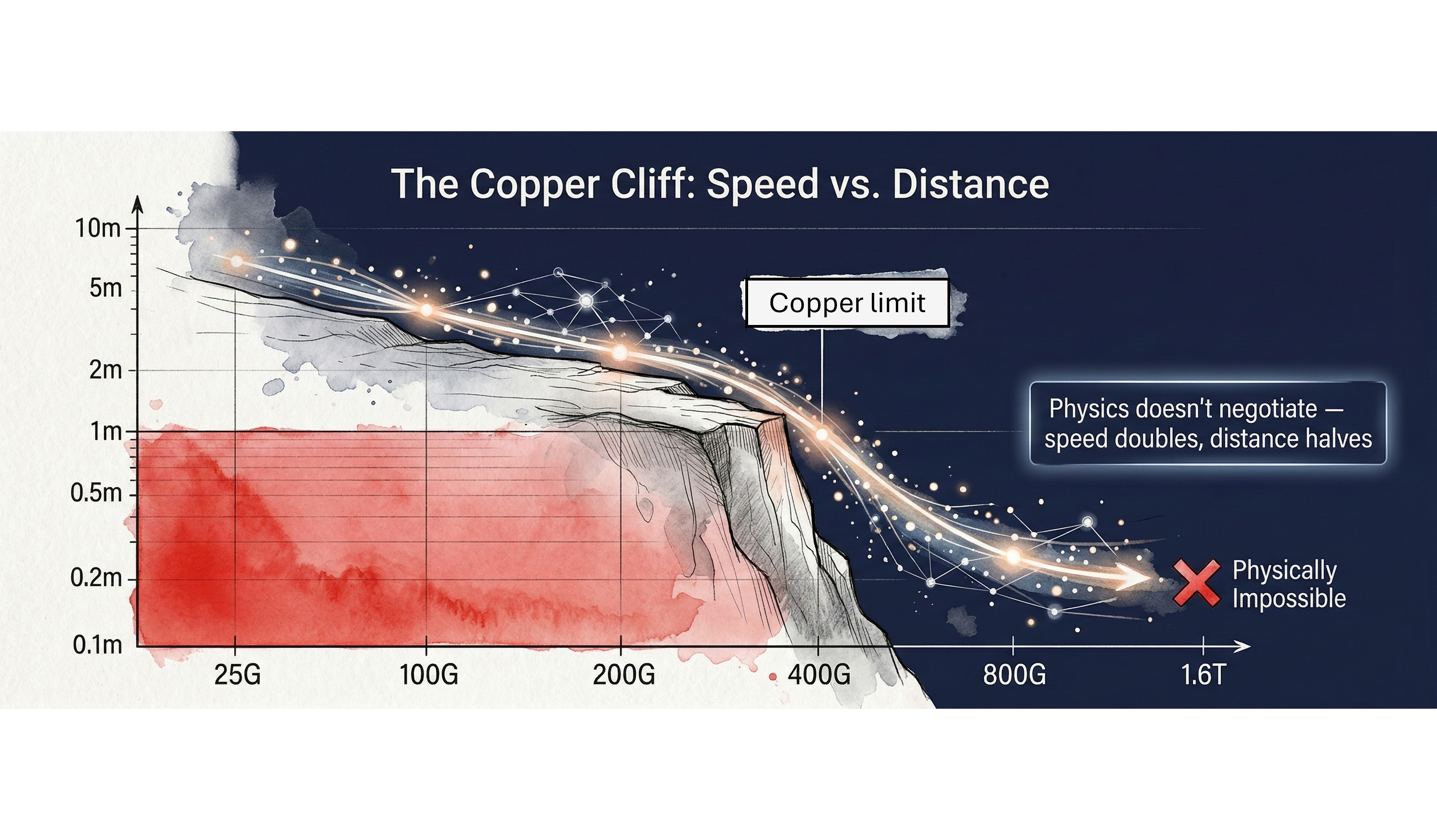
When you push electrical signals through copper, the signal degrades as distance and frequency increase — a consequence of the skin effect and dielectric loss. Combating this degradation requires amplification, and amplification burns power exponentially.
According to Marvell’s data, the effective transmission distance of copper wire collapses as speeds increase:
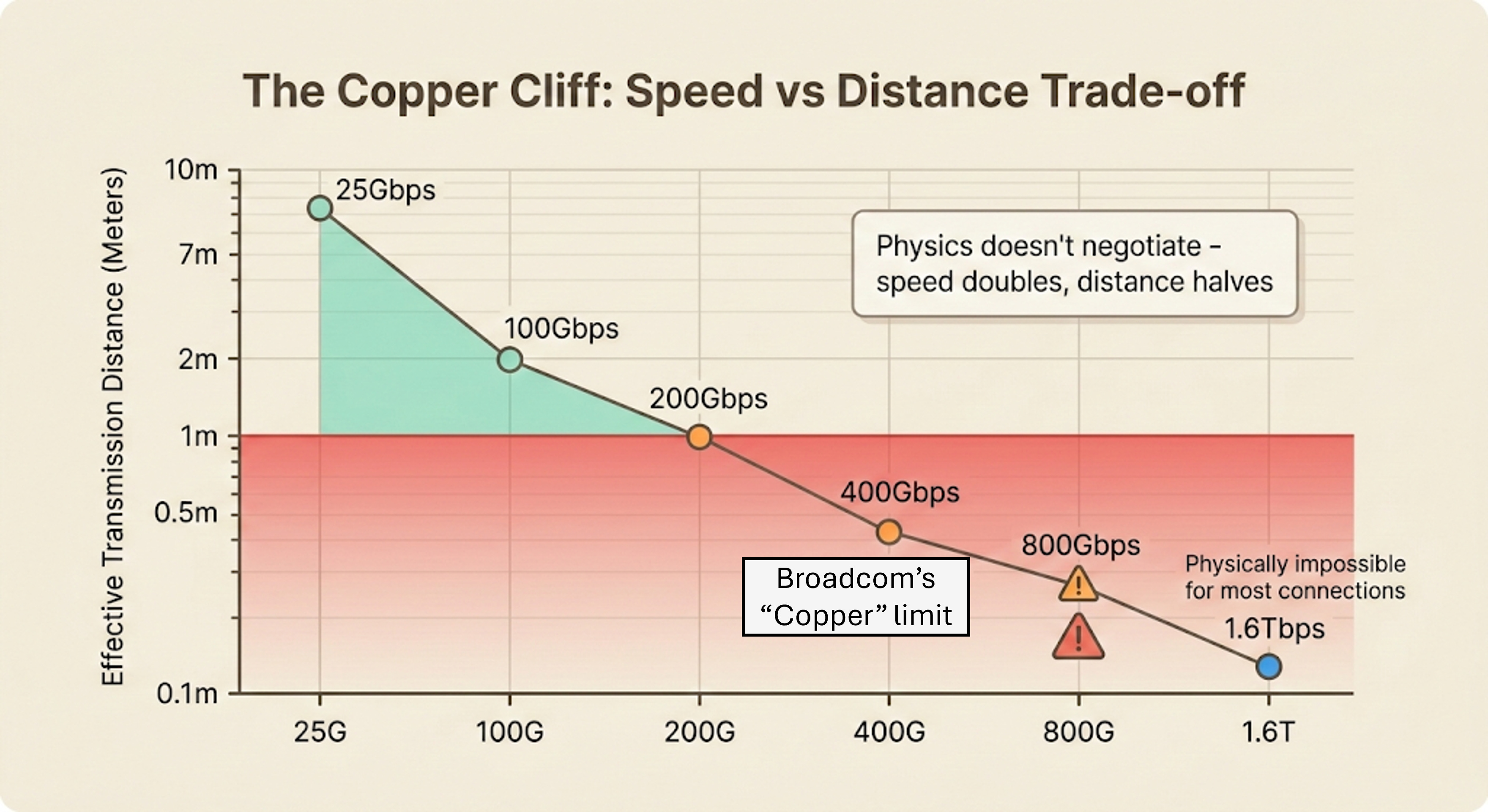
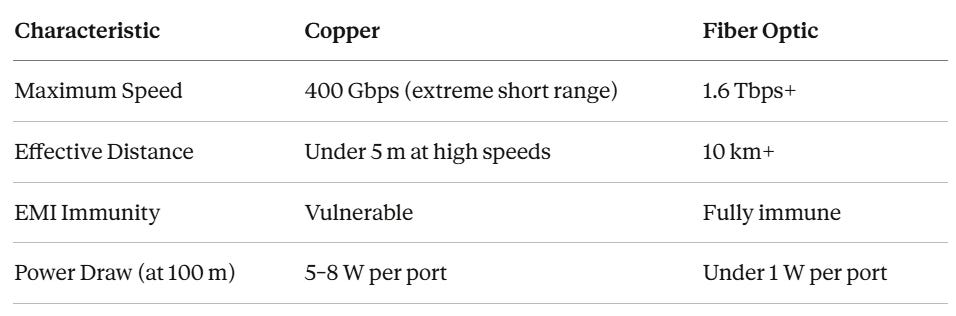
In an environment where AI racks consume 120–130 kW of power, a communications layer that alone eats through 10% or more of that budget is simply not acceptable. Fiber, by contrast, has almost no distance constraints. It supports 10 km+ transmission, is immune to electromagnetic interference, and draws minimal power.
In an AI factory, optics are not a choice — they are a physical inevitability.
3. Broadcom vs. NVIDIA: Both Are Right. The Market Was Wrong.
What Hock Tan Actually Said
Hock Tan was not wrong. He said copper would continue to handle the 2–3 meter connections inside the rack. At that range, 400G SerDes is impressive technology — cheaper and simpler than optics. CPO is still complex, expensive, and unproven at volume. Within the 2026–2027 timeframe, Hock Tan is 100% correct.
What Jensen Huang Is Looking At
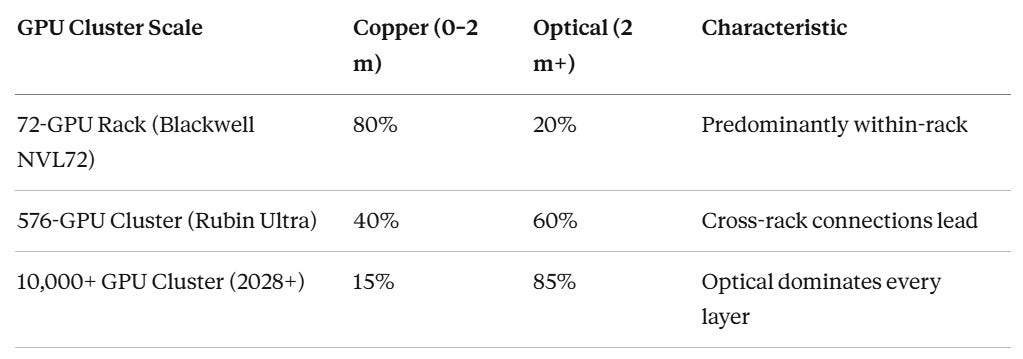
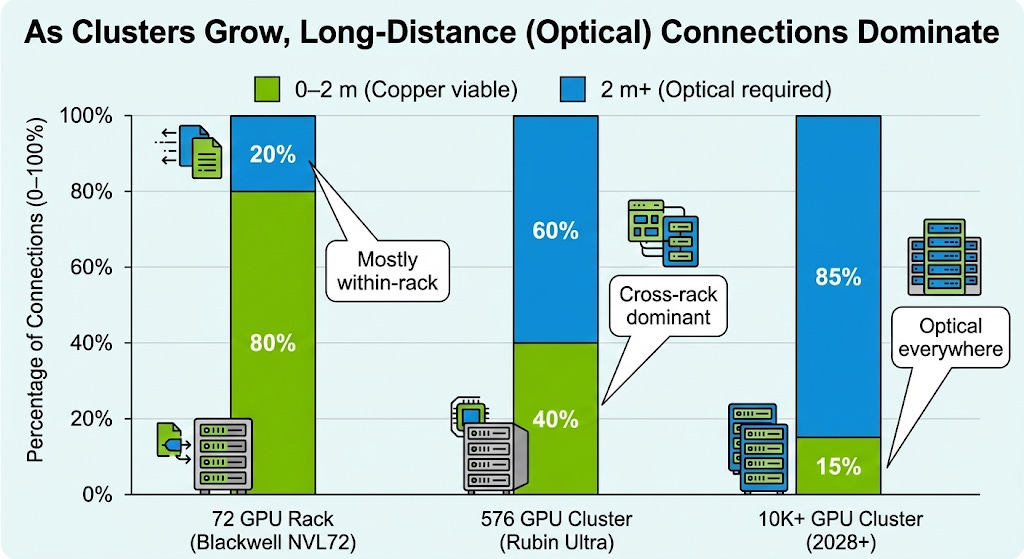
Jensen wasn’t wrong either. He’s just solving a different problem. Connecting 576 GPUs in a Rubin Ultra cluster requires linking hundreds of racks together. At 10 meters, 50 meters, or 100 meters, copper is physically out of the picture. Within the 2028–2030 timeframe, Jensen’s direction is 100% correct.
Key Insight: The market mistook Broadcom and NVIDIA as giving opposite answers to the same question. Hock Tan was talking about within-rack distances (0–2 m) in 2026–2027. Jensen was looking at cross-cluster distances (10–100 m+) in 2028–2030. This isn’t a contradiction — it’s two different conversations on two different axes of time and distance.
The Distance × Time Matrix
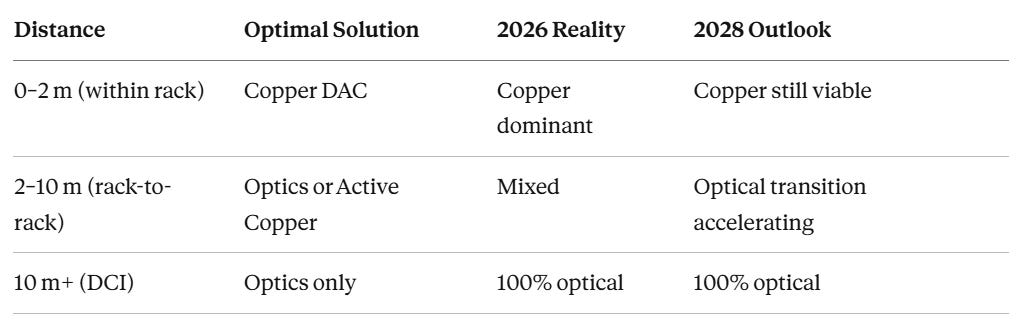
The Larger the Cluster, the More Optics Dominates