
1. OCS (Optical Circuit Switching) Definition and Principles
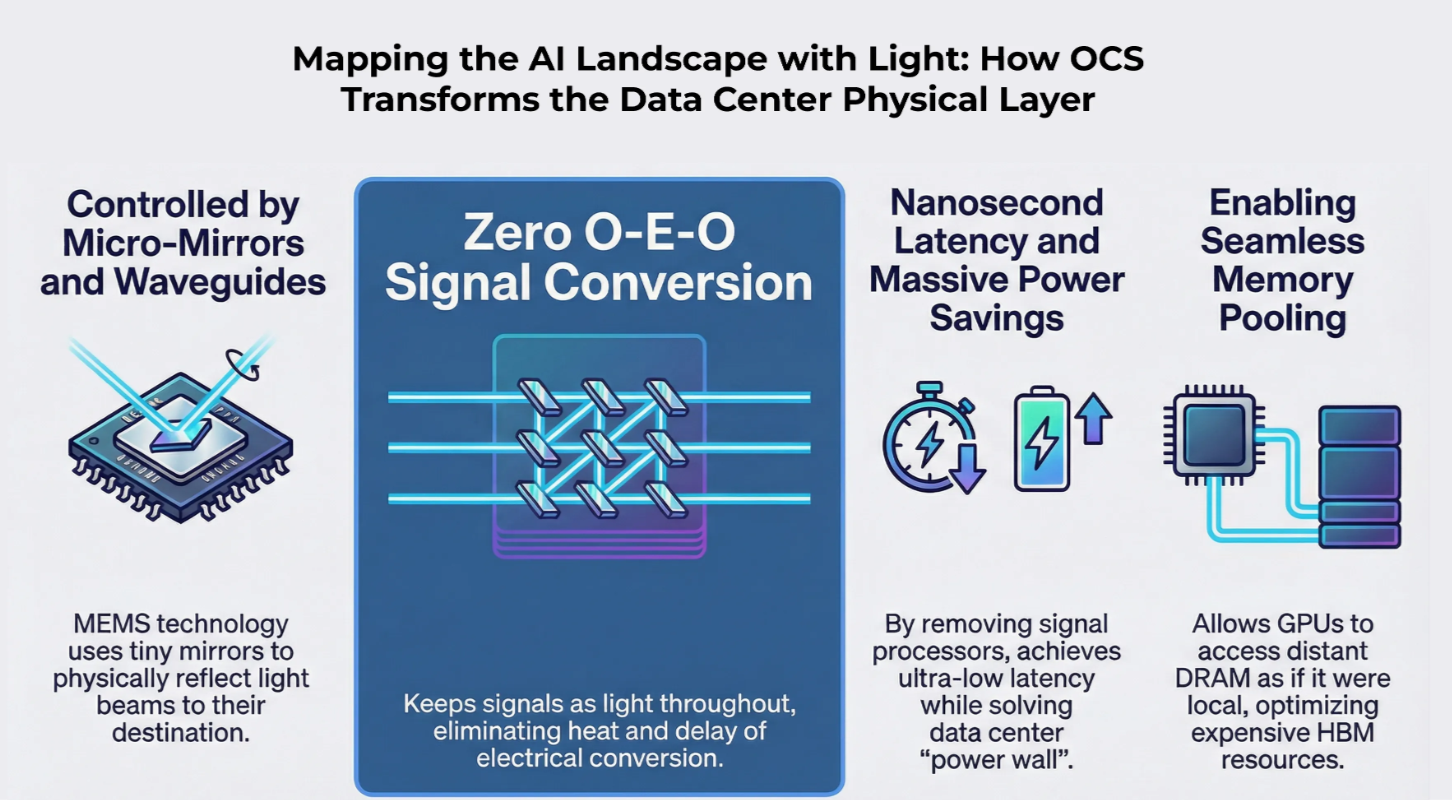
Definition: A Layer 1 switching technology that reroutes paths at the optical signal level without Optical-Electrical-Optical (O-E-O) conversion.
Operating Mechanisms:
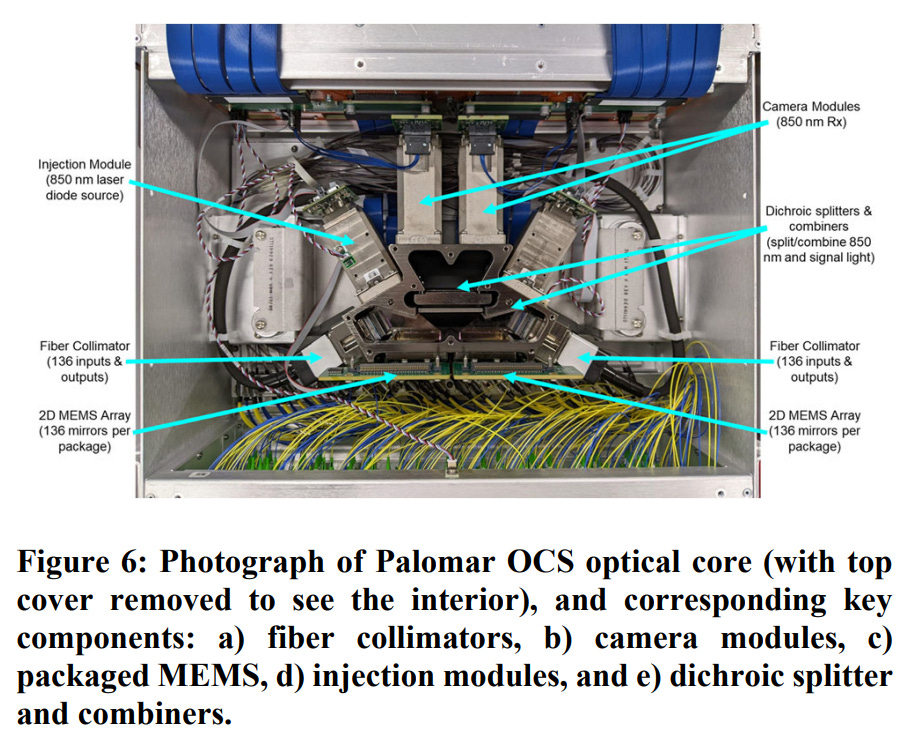
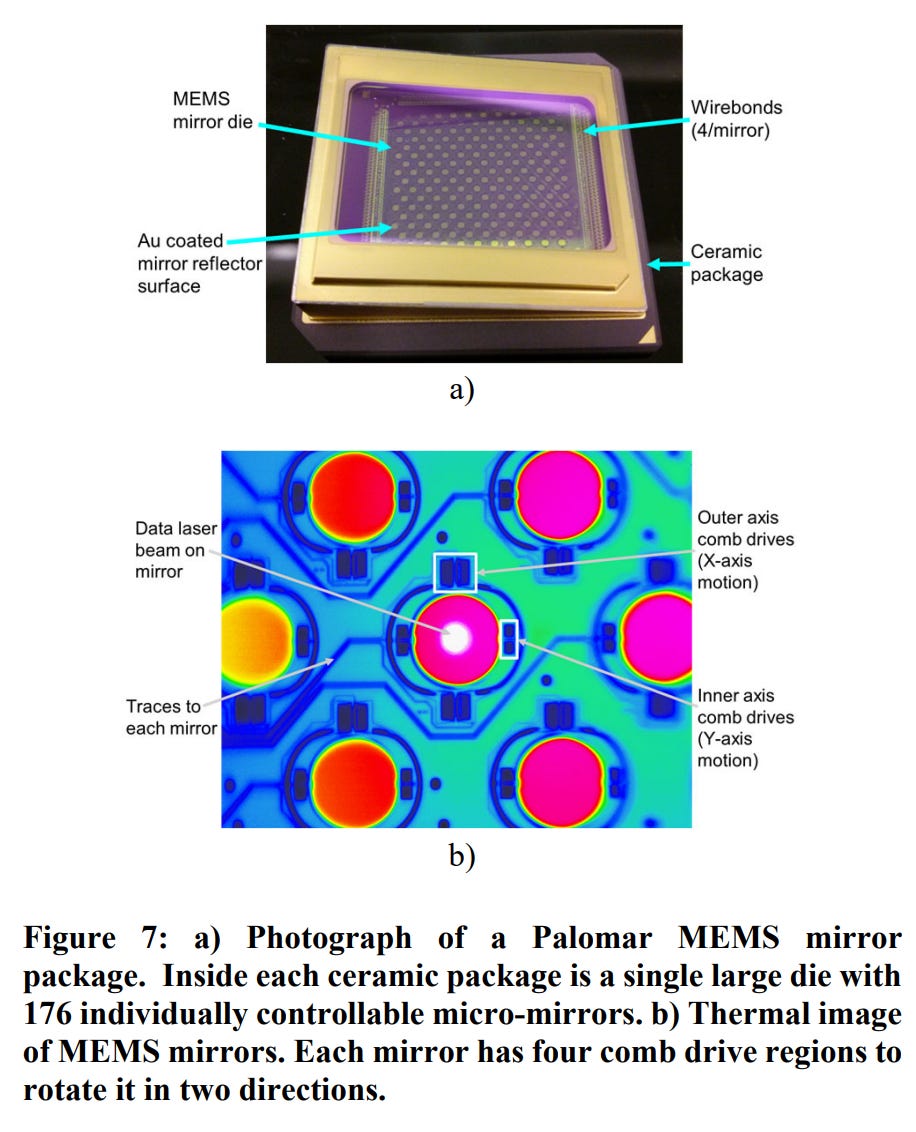
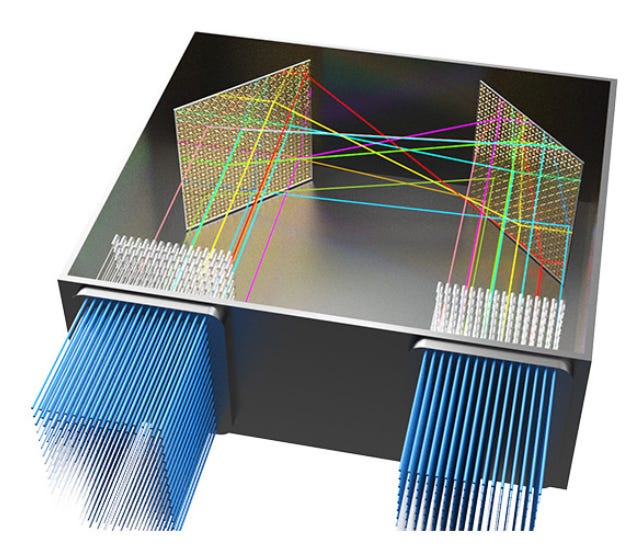
MEMS Approach: Uses micro-mirrors to physically reflect light beams (e.g., Google Apollo, Lumentum).
SiPh & SOA Approach: Controls light paths via on-chip waveguides and semiconductor optical amplifiers (e.g., Salience Labs, iPronics).
Performance Metrics:
Insertion Loss: Modern units target 1.0dB to 2.0dB for high-efficiency connectivity.
Switching Speed: MEMS operates in the ms range, while SOA/SiPh achieves ns to μs range for ultra-fast reconfiguration.
Bandwidth Transparency: OCS is independent of data baud rates, making it future-proof for 1.6T and beyond.
2. Strategic Deployment Areas
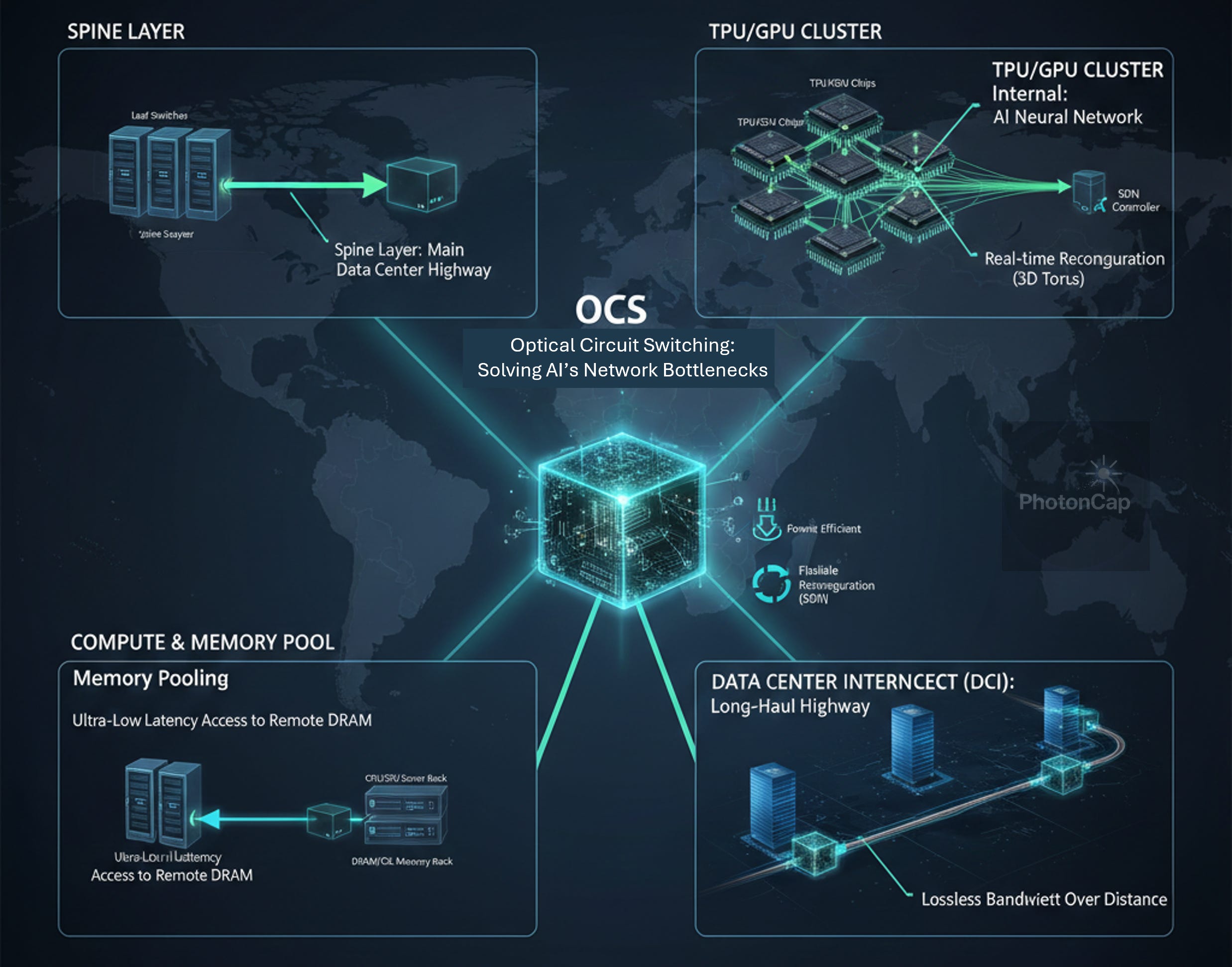
Spine Layer (Main Highway): Located at the backbone to interconnect Leaf/ToR switches; reduces power and cost by >40%.
TPU/GPU Clusters (Neural Network): Enables Inter-Chip Interconnects (ICI) for 3D Torus topologies and real-time fault recovery.
Compute-to-Memory Fabric (Memory Pooling): Core infrastructure for Memory Tiering; allows servers to access remote DRAM/CXL with local-like latency.
Data Center Interconnect (DCI): Serves as a long-haul highway between separate DC buildings to minimize bandwidth loss.
3. Technical Rationale: Why OCS Now?
Power/Thermal Wall: AI scaling has pushed traditional electronic switching to its thermal limits.
Network Scalability: Optical signals maintain integrity over longer distances, ideal for massive GPU clusters.
Dynamic Reconfigurability: Software-defined control allows for physical topology changes without manual recabling.
4. Key Applications: Memory Tiering and Resource Allocation
DRAM Pooling: Optimizes the ratio of expensive HBM by utilizing remote DRAM via low-latency OCS paths, a key component of Google’s next-gen architecture.
Dynamic Allocation: Enables Software-Defined Networks (SDN) to reconfigure physical network topologies in real-time based on specific workload requirements.
Summary: “A next-generation networking technology that resolves AI communication bottlenecks using light and mirrors instead of electricity.”
5. Key Players and Ecosystem
(1) Google
Developed Project Apollo (OCS) in-house with a vertically integrated SDN interface.
Increased throughput by 30%, use 40% less power, incurs 30% less Capex, reduces flow completion by 10%, and delivers 50x less downtime across their network.

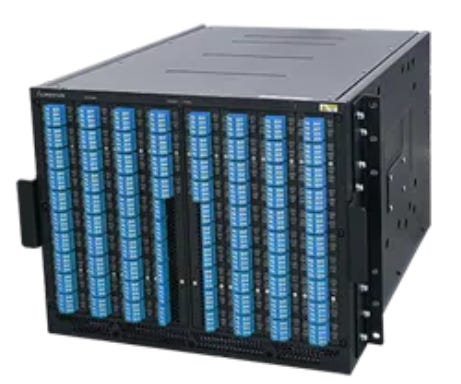
(2) Lumentum
Recognized Google’s primary hardware partner for OCS deployment.
Co-leads the OCP OCS Sub-project to standardize optical switching infrastructure. (https://ipronics.com/ipronics-and-lumentum-lead-the-efforts-to-standardize-ocs-alongside-key-industry-players/)
https://www.lumentum.com/en/products/300x300-optical-circuit-switch-ocs
(3) Coherent
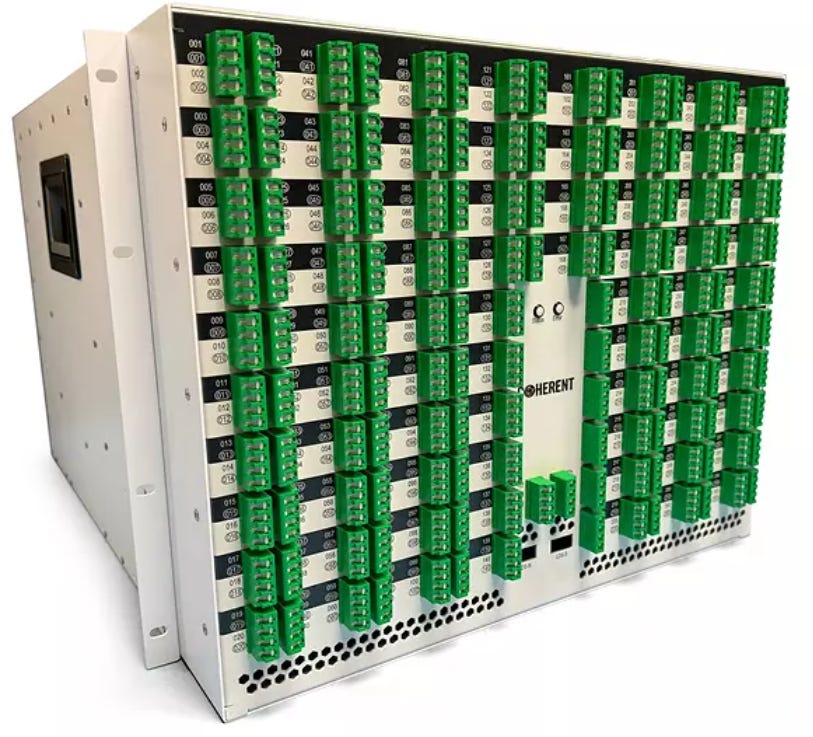
Utilizes Liquid Crystal (LCOS) technology; won the ECOC 2024 Innovation Award. (https://www.coherent.com/networking/optical-circuit-switch)
Supports diverse configurations including 64x64 and 320x320 matrices.
(4) DiCon Fiberoptics
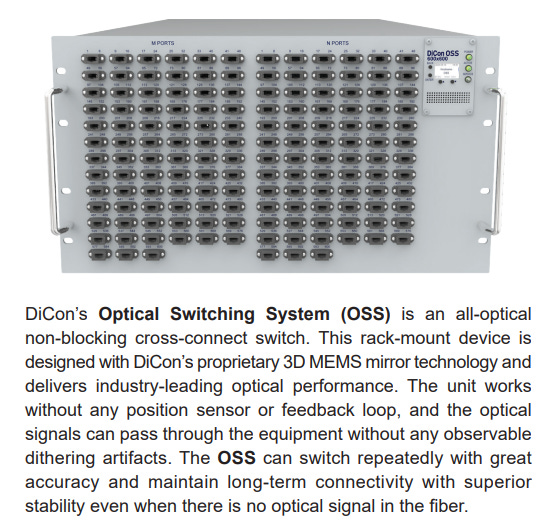
Offers 3D MEMS supporting up to 600x600 ports with ultra-low loss.
Focused on high-reliability sectors including Quantum Computing and Defense. (https://www.diconfiberoptics.com/products/Solutions-Network-Management-Cyber-Security-OSS.php)
(5) iPronics
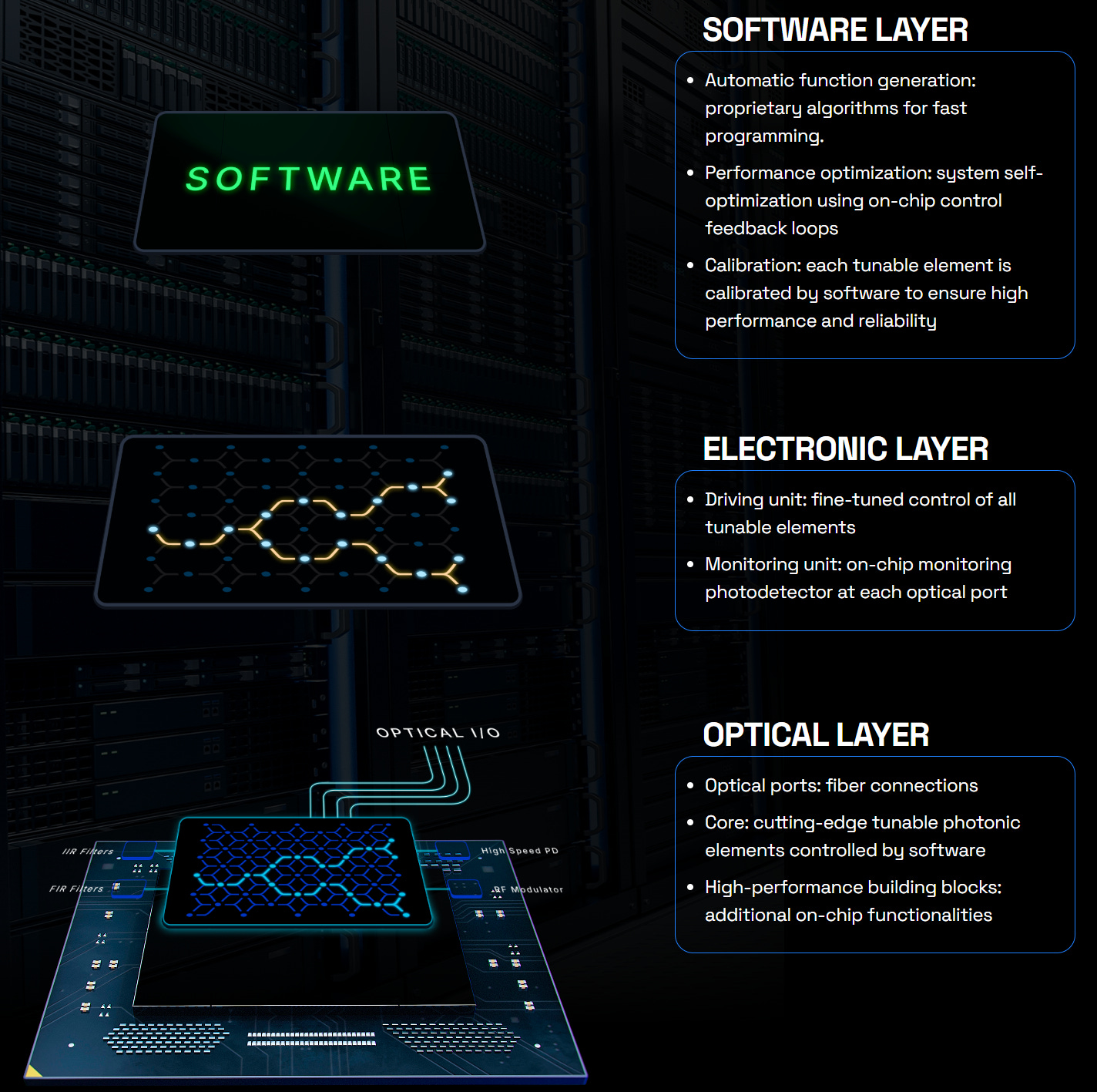
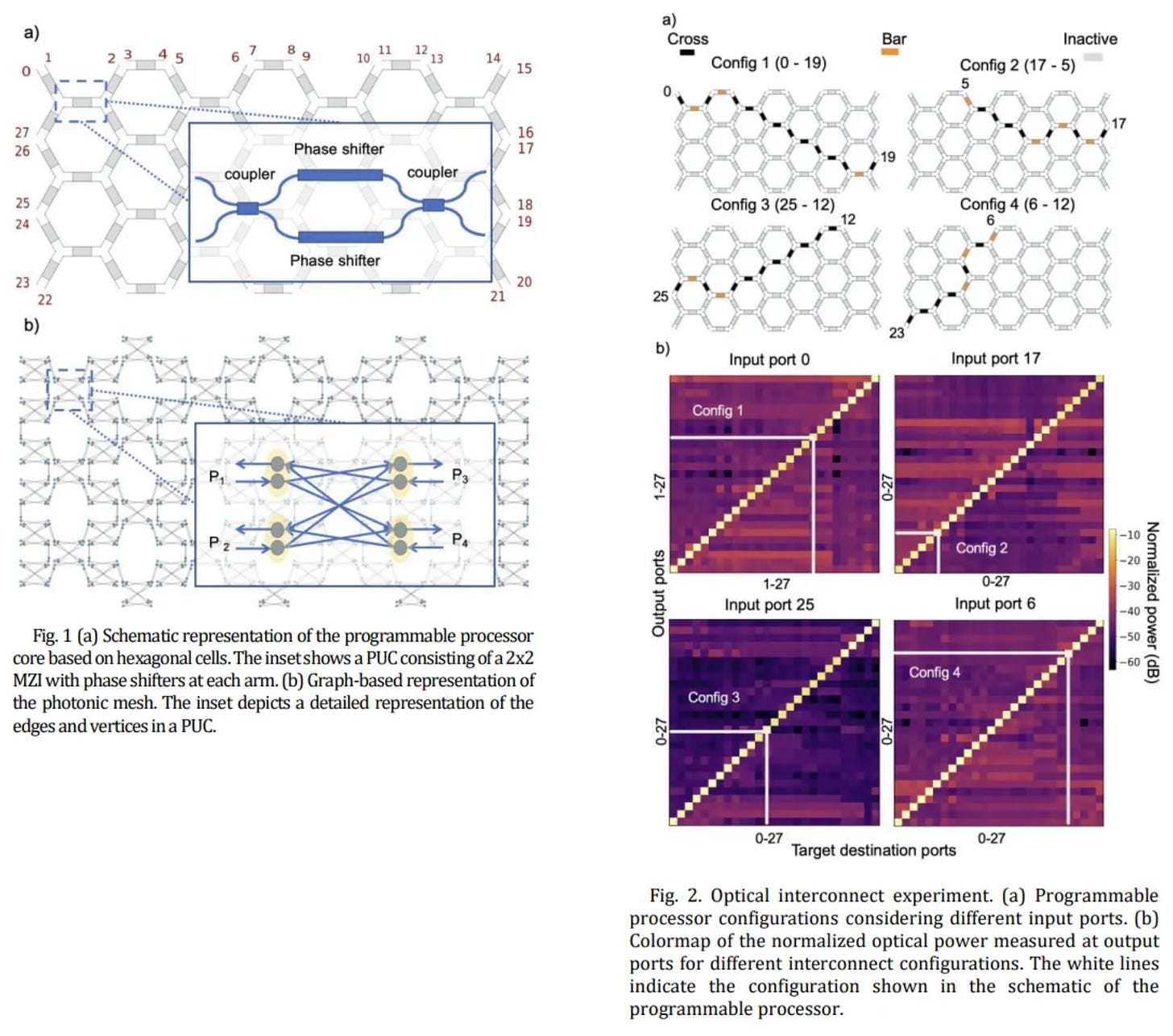
Pioneered FPPGA (Field Programmable Photonic Gate Array) technology.
Co-leads OCP OCS standardization; enables software-defined, reconfigurable optical paths.
(https://arxiv.org/pdf/2404.08648, Journal of Optical Communications and Networking 16.8 (2024) https://doi.org/10.1364/JOCN.521505)
(6) nEye.ai
Developed Silicon Photonics MEMS for high-density interconnects.
Backed by NVIDIA, Microsoft (M12), and Micron.
Joined OCS project (https://www.opencompute.org/blog/the-open-compute-project-announces-new-optical-circuit-switching-ocs-project)(https://www.opencompute.org/blog/the-open-compute-project-announces-new-optical-circuit-switching-ocs-project)
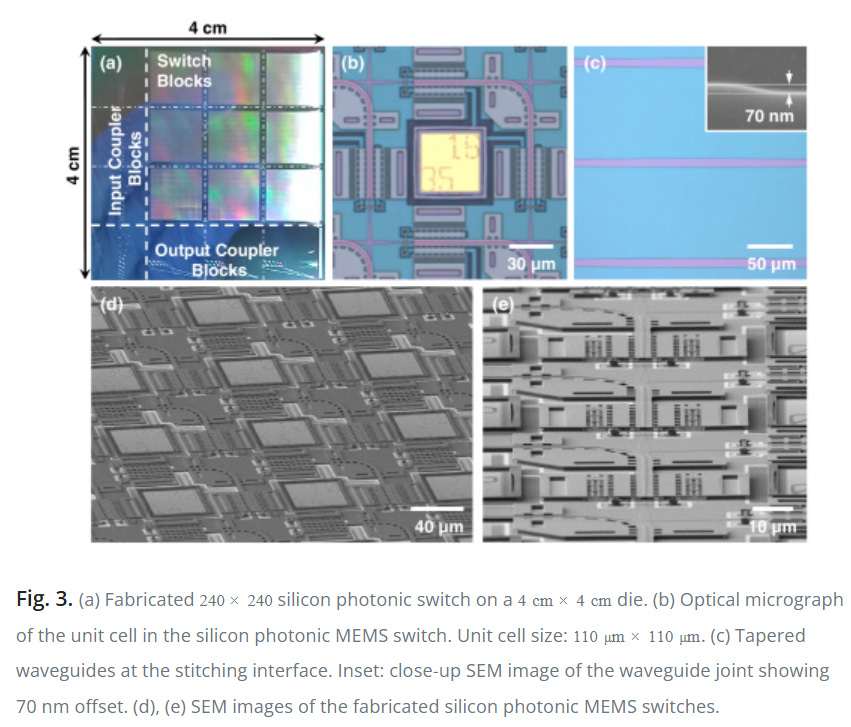
https://doi.org/10.1364/OPTICA.6.000490 (co-founder Dr. Tae Joon Seok’s paper)
(7) Salience Labs
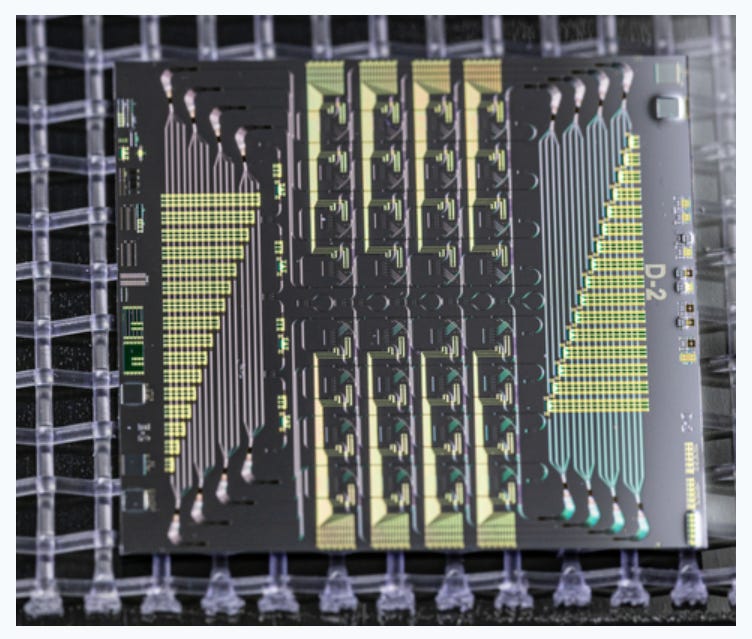
Leveraging SOA (Semiconductor Optical Amplifier) for low-latency, loss-compensated switching.
Backed by Applied Ventures to drive energy-efficient AI data centers. (https://www.appliedmaterials.com/us/en/newsroom/perspectives/optical-circuit-switches-show-promise-more-energy-efficient-ai.html)
thoughts on piezoelectric / Huber ?
Electronic packet switching hit its thermodynamic wall the moment all-reduce bursts started wiping out top-of-rack buffer memory. ⚡
When thousands of GPU accelerators flood traditional switches, queueing jitter spikes into microsecond territory. In synchronous training, one delayed packet stalls the entire cluster. You can't patch this with software queues. 🛑
Layer 1 Optical Circuit Switching changes the math entirely. Bypassing O-E-O conversion cuts power by 40% while holding insertion loss under 2.0dB. But the real divide isn't optical versus electronic, it's mechanical MEMS versus nanosecond SOA and Silicon Photonics. 🔬
MEMS micro-mirrors give you physical stability for long-haul spine layers, but their millisecond damping locks you into static topologies. SOA and photonic gate arrays reconfigure paths in nanoseconds. That speed turns network routing into a direct extension of the silicon register file. 💡
When your switching latency matches the bus speed of remote DRAM, memory tiering stops being an abstraction. Remote CXL pools start behaving like local HBM. Spatial layout becomes dynamic state memory. 🌊
Why are we still building megawatt data centers around probabilistic electronic packet queues when light and mirrors can lock down deterministic execution at 1.6T? 👁️
(⚙️_⚙️)