
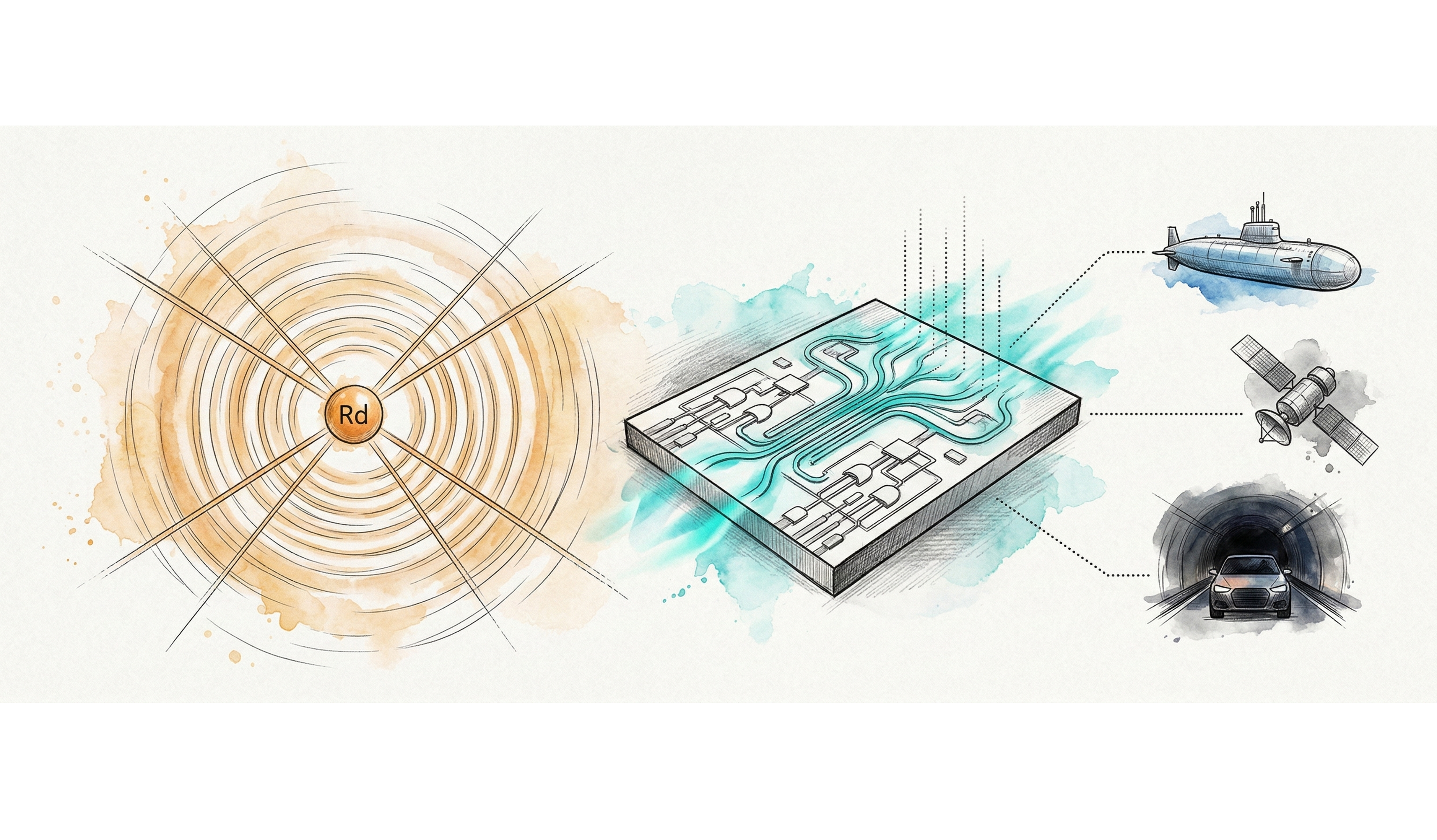
Executive Summary — 3 Key Takeaways
Quantum sensing turns the extreme fragility of quantum systems into a precision measurement tool, crossing the revenue threshold before quantum computing.
Infleqtion (NYSE: INFQ) shares a single neutral-atom hardware stack across both sensing and computing, delivering tangible results in the PNT (Positioning, Navigation, and Timing) market.
Chip-scale miniaturization (PIC integration), AI-based quantum control, and standardization of global quantum reference data are the key variables for future market dominance.
Core Investment Thesis: 2026 marks the year quantum sensors begin generating meaningful revenue in defense and space applications. Expansion into civilian markets depends on the pace of miniaturization and cost reduction.
Introduction: Why Quantum Sensing, Not Quantum Computing, Deserves Your Attention Now
In the tech investment market, the word “quantum” has long been synonymous with the exponential computational power promised by quantum computing. Yet the field actually crossing the commercialization threshold first — generating real revenue — is quantum sensing.
In February 2026, Infleqtion (NYSE: INFQ) listed on the New York Stock Exchange and secured a substantial capital raise, signaling that quantum technology has evolved from a research hypothesis into a capital-market reality. While quantum computers face the enormous engineering challenge of stably controlling tens of thousands of qubits, quantum sensing turns the very vulnerability of quantum systems — their extreme sensitivity to environmental disturbances — into a precision measurement tool.¹
Why Aren’t Current Sensors Good Enough? — The Standard Quantum Limit (SQL)
Today’s classical sensors have already hit the ceiling of their physical performance. MEMS accelerometers cannot eliminate drift caused by thermal noise, and quartz oscillators cannot fundamentally solve frequency shifts from temperature changes.
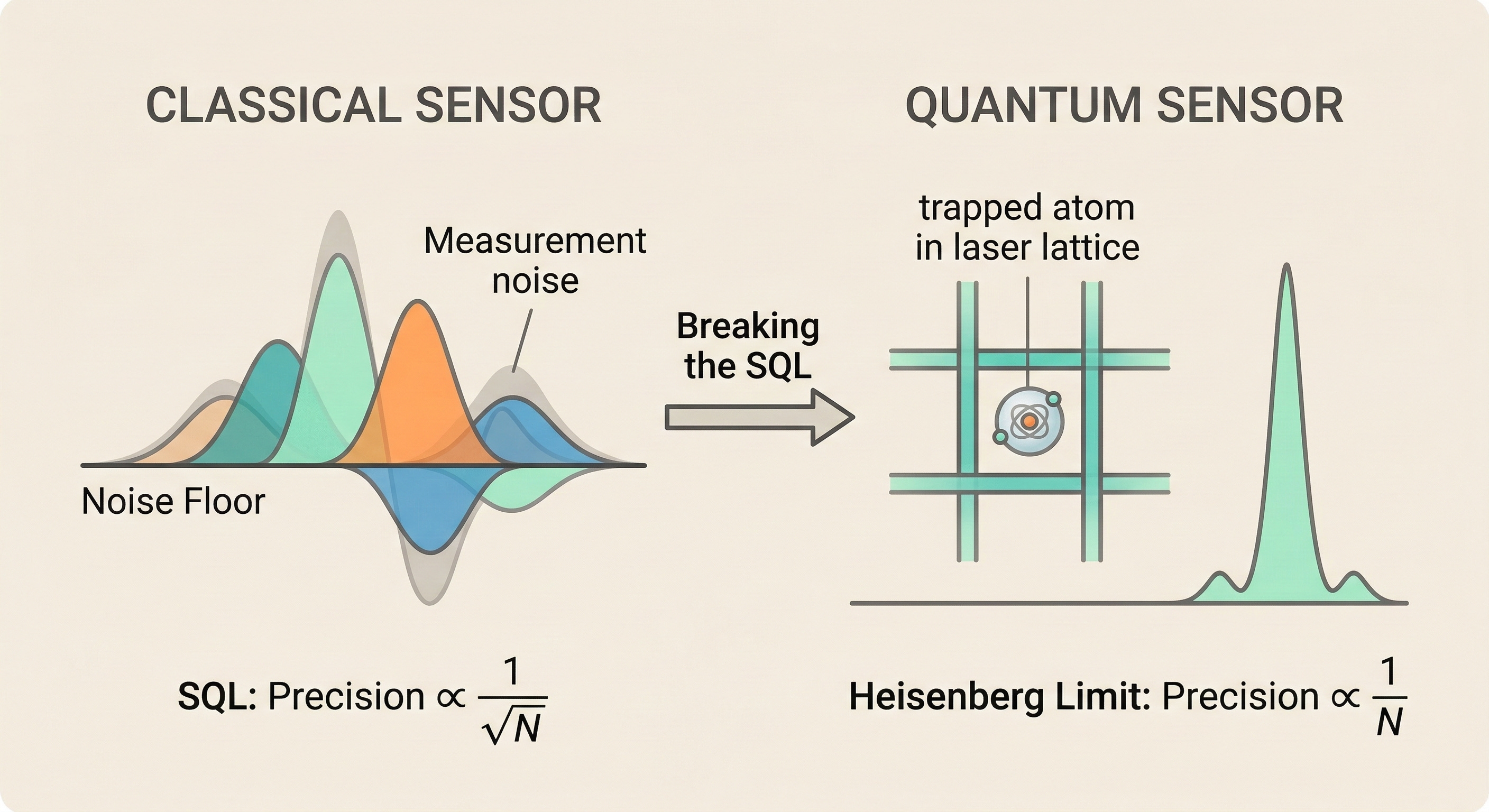
The measurement uncertainty of a sensor using N independent classical particles cannot surpass the Standard Quantum Limit (SQL), which scales as 1/√N.
ℹ️ What does 1/√N actually mean?
This is not an absolute precision value — it’s a scaling law. If measuring a magnetic field with a single atom yields an uncertainty of ±100 nT (nanotesla), using 100 atoms independently reduces the uncertainty to ±10 nT (= 100 × 1/√100). This is exactly the same statistical principle as polling: quadrupling the sample size halves the margin of error.
With quantum entanglement, you can approach the Heisenberg Limit, which scales as 1/N. The same 100 atoms could reach ±1 nT. The gap between SQL and the Heisenberg Limit grows dramatically as N increases.
Yet the precision demanded by today’s world far exceeds SQL. Autonomous vehicles must determine position to within centimeters in GPS-denied urban canyons, cutting-edge semiconductor fabs must detect atomic-scale defects, and military operations must maintain accurate timing under electronic warfare (jamming).
Quantum sensing uses atoms, photons, or solid-state spin defects to measure time, magnetic fields, gravity, and acceleration, providing sensitivity hundreds to thousands of times greater than classical sensors.²
Why Sensing Before Computing — Turning ‘Defects’ into ‘Features’
The difference in commercialization speed between quantum computing and quantum sensing comes down to how each handles the fragility of quantum states. In a quantum computer, interaction with the external environment causes fatal computational errors — it’s “noise.” In quantum sensing, that very interaction is the “signal” being measured.³
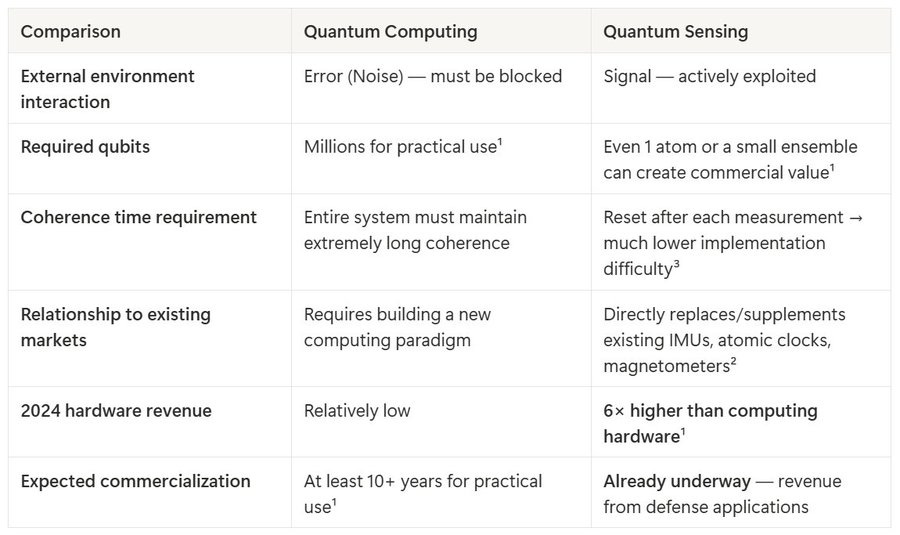
In short: quantum computing must “fight” the fragility of quantum states, while quantum sensing “exploits” it. That’s why sensing makes money first.
Phase 1: Commercialization Speed and Market Analysis
1.1 Infleqtion’s IPO and ‘Revenue-First’ Strategy
Infleqtion’s core competitive advantage lies in using neutral atoms — nature’s perfect qubit — to share a single hardware stack across both computing and sensing. Every rubidium (Rb) atom has identical energy levels anywhere in the universe, making large-scale scaling inherently easier than superconducting approaches that require individual qubit calibration.
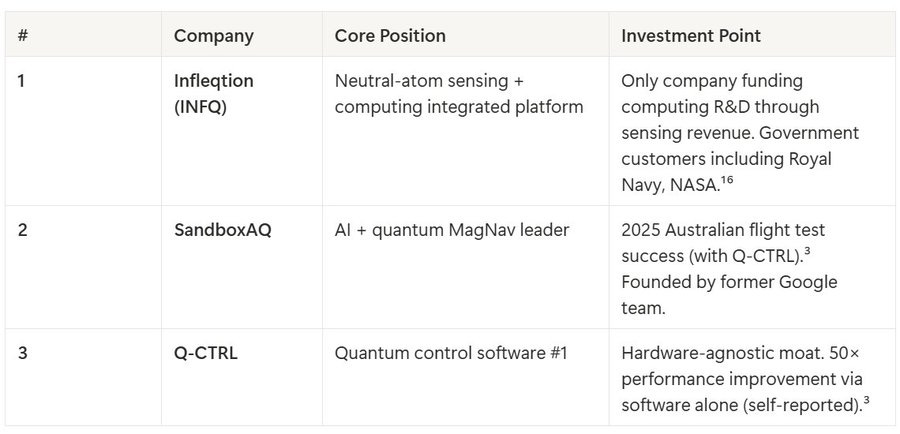
This structure creates an economic model where sensor sales revenue offsets the massive R&D costs of quantum computer commercialization. According to Infleqtion (company disclosure), funds raised through the IPO will be deployed toward the next-generation quantum processor ‘Sqale’ and ultra-compact quantum sensor mass-production infrastructure.⁴
1.2 The SWAP Bottleneck: 1st-Gen Miniaturization (CSAC) vs. 2nd-Gen (PIC)
The biggest challenge for quantum sensors to move from the lab to the field is SWAP (Size, Weight, and Power). Early cold-atom gravity sensors had vacuum chambers 52 cm in diameter, weighed 70 kg, and were literally operated from trucks.⁵
Two miniaturization approaches currently exist, and they represent different generations of technology.
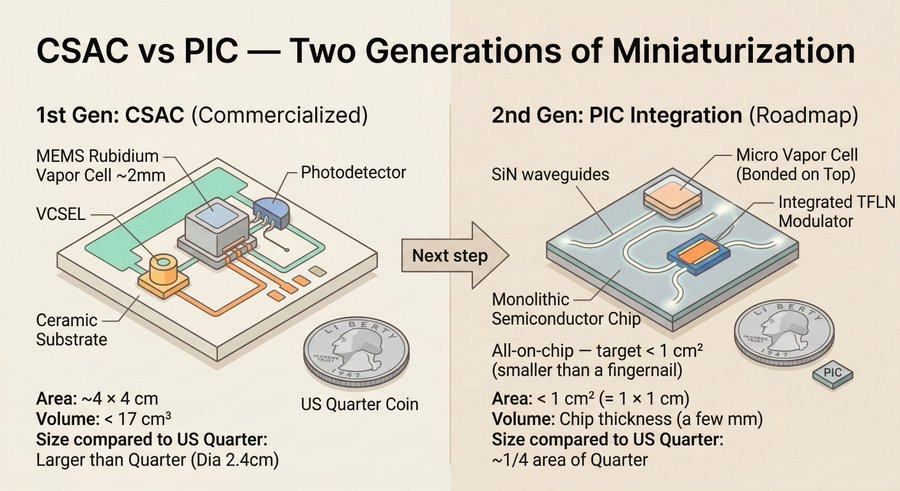
ℹ️ 1st Gen: CSAC (Already Commercialized) vs. 2nd Gen: PIC Integration (Roadmap Stage)
CSAC (Chip-Scale Atomic Clock) is an ultra-miniature module where a VCSEL laser, MEMS-fabricated rubidium vapor cell, and photodetector are assembled side by side on a ceramic substrate. This is closer to miniature assembly of discrete components, not silicon photonics. Microchip Technology’s SA65-LN is the representative product, originating from a DARPA program.⁶˒⁷
PIC (Photonic Integrated Circuit) integration connects lasers, modulators, and detectors via waveguides on a single semiconductor wafer. This is the 2nd-generation approach that Infleqtion is pursuing, and it remains at the roadmap stage.
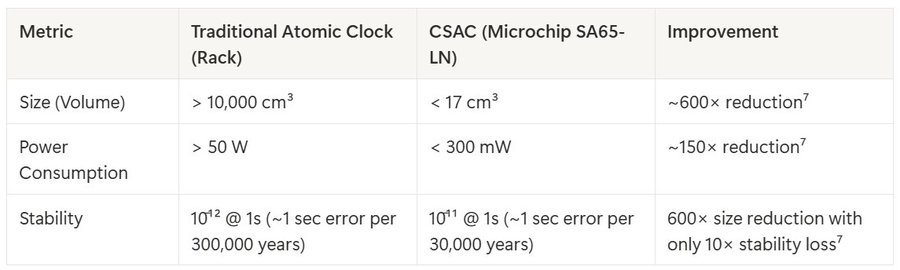
Note: DARPA announced CSAC program results as “100× size reduction, 50× power reduction.”⁶ The 600×/150× figures above compare the specific SA65-LN specs against rack-mount atomic clocks — the multiplier varies depending on the baseline.
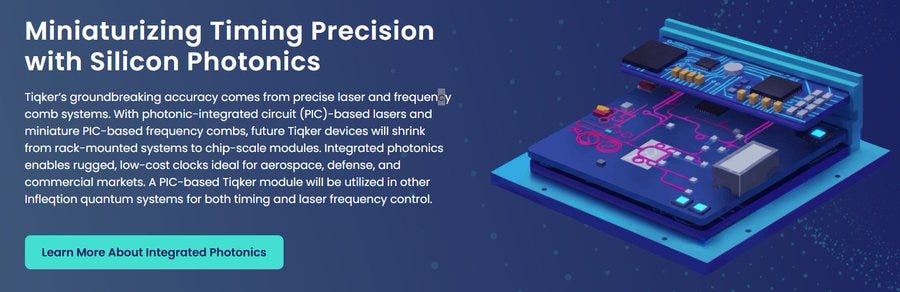
Infleqtion’s Tiqker optical clock is, according to Infleqtion, capable of hydrogen-maser-level short-term stability, currently at 3U rack-mount size. Further reduction to a chip-scale module via PIC technology is the future roadmap.⁴
1.3 How Does Quantum Sensing Actually Work? — Principles by Application
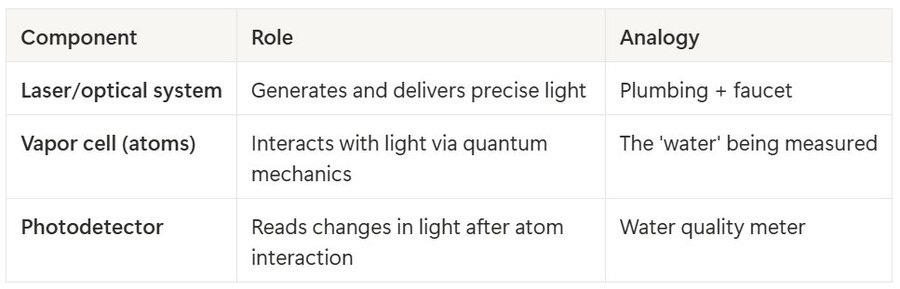
A quantum sensor has three core components: (1) a laser/optical system (including PIC) that generates and delivers precise light, (2) atoms (e.g., in a vapor cell) that interact with the light via quantum mechanics, and (3) a photodetector that reads changes in the light after it passes through the atoms. The PIC doesn’t perform the sensing itself — it’s an engineering tool for delivering light compactly and stably.

Atomic Clock (Time Measurement): The ground state of ⁸⁷Rb splits into two hyperfine levels separated by exactly 6,834,682,610.904 Hz — identical for every rubidium atom in the universe. When a laser modulated with two frequency components hits the atoms, and the frequency difference exactly matches this value, the atoms enter a quantum interference state (CPT, Coherent Population Trapping) and stop absorbing light. Locking the photodetector to the point of maximum transmission creates a clock tied to the atom’s intrinsic frequency. Where a quartz clock counts mechanical vibrations, an atomic clock counts quantum energy level spacings — a value that doesn’t change with time or temperature.
Magnetic Field Measurement (OPM Magnetometer): A laser aligns the atomic spins in one direction inside the vapor cell (optical pumping). An external magnetic field causes the spins to undergo Larmor precession — similar to a tilted gyroscope spinning like a top. Since the precession frequency is exactly proportional to the magnetic field strength, reading this frequency with light yields ultra-precise magnetic field measurements.
Inertial Measurement (Acceleration/Gravity): This requires cold atoms rather than a simple vapor cell. Atoms are cooled to near absolute zero, then laser pulses split the atom’s matter wave into two paths before recombining them. If acceleration or gravity is present, a phase difference develops between the two paths, readable as an interference pattern. The principle is the same as an optical interferometer (e.g., Michelson), but atoms have mass, making them trillions of times more sensitive to gravity.
Why it’s “quantum”: Atomic energy levels, spin precession, and matter-wave interference are all phenomena explained exclusively by quantum mechanics. Classical sensors (MEMS, quartz) have no such mechanisms — which is why they cannot surpass SQL.
1.4 Market Size and Growth Outlook
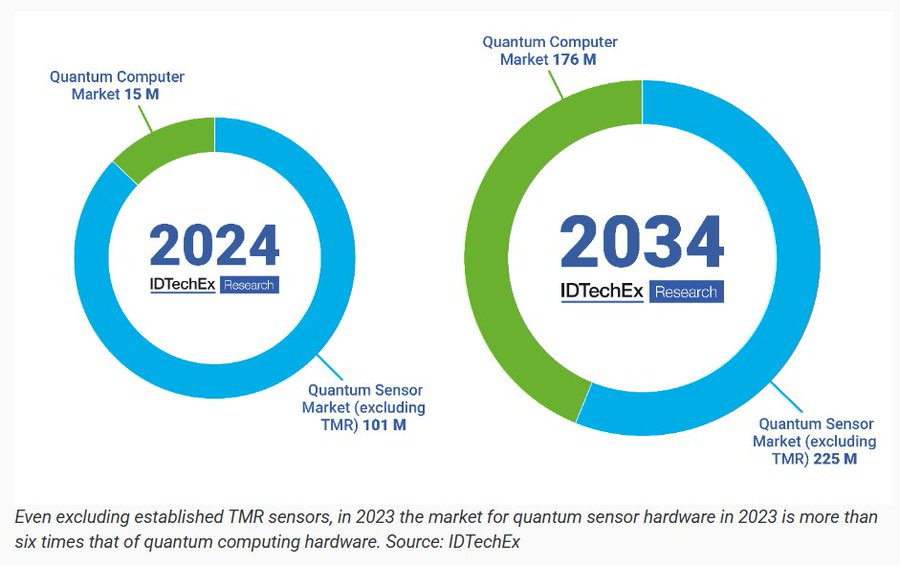
Aggregating multiple market reports, the quantum sensor market is projected to grow from roughly $0.4–0.8 billion in 2025 to $1.0–1.9 billion by 2035.⁸˒⁹ According to IDTechEx, quantum sensing hardware revenue in 2024 was over 6× higher than quantum computing hardware.¹
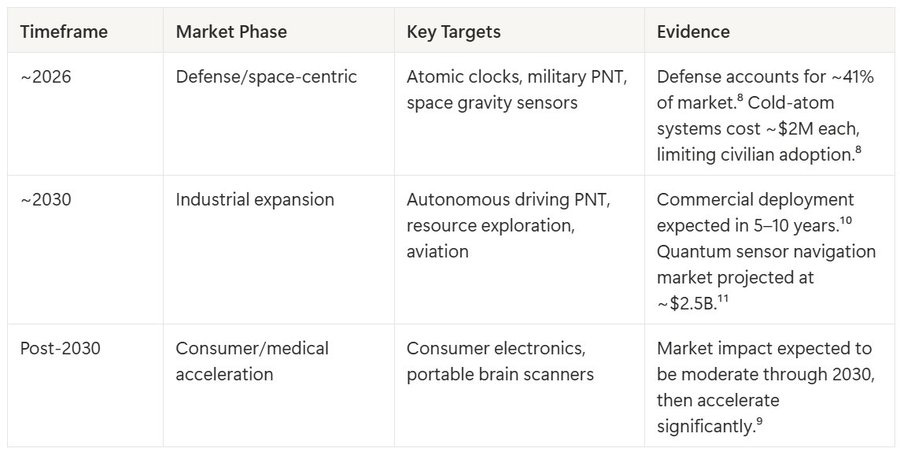
Note: Market size estimates vary widely across reports due to differing definitions (quantum sensors only vs. quantum navigation vs. total quantum TAM). Figures above are based on direct quantum sensor hardware revenue.
Phase 2: Technical Differentiation — Platform Moats and PIC Integration
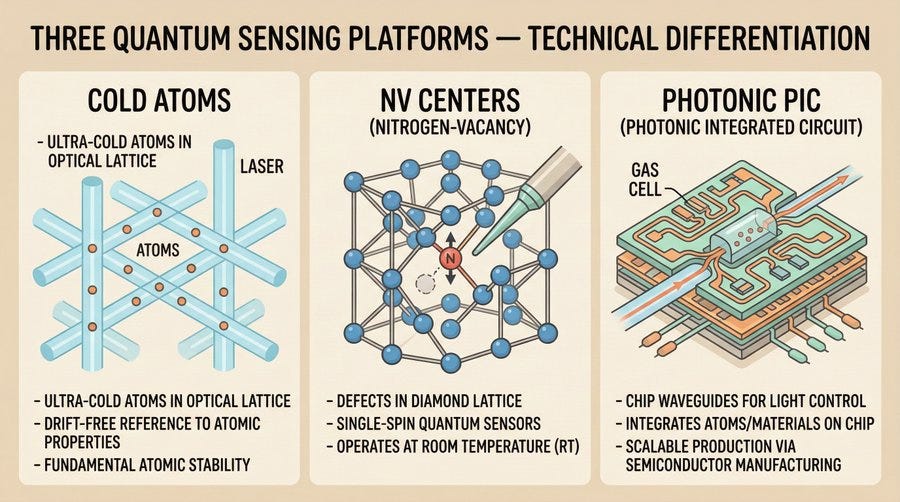
Quantum sensing implementations divide broadly into cold atoms, NV centers (Nitrogen-Vacancy Centers), and photonics-based approaches.
2.1 Platform Comparison
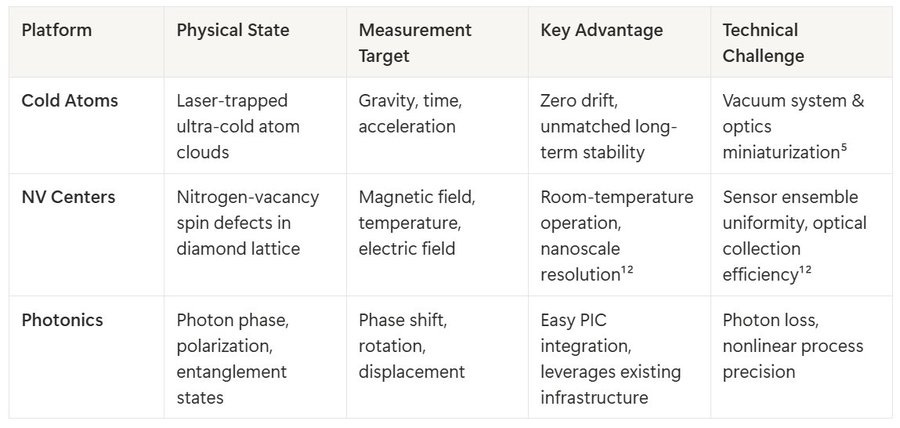
2.2 Cold Atoms: Establishing the Absolute Standard — and Infleqtion’s ‘Neutral Atoms’
ℹ️ Terminology: ‘Cold Atoms’ vs. ‘Neutral Atoms’
Cold atoms is a broad technical category referring to atom clouds cooled to near absolute zero via laser cooling.
Neutral atoms is a specific approach within cold atoms that traps uncharged atoms (rubidium, cesium, etc.) in optical lattices for individual control.
Infleqtion uses this neutral atom approach, which is distinct from ion traps (which confine charged atoms). In other words, Infleqtion uses the neutral atom platform — a subcategory of cold atom technology.
Cold atom technology uses atom interferometry, treating atoms as matter waves. Because atoms have mass, they respond to gravity trillions of times more sensitively than photons.⁴
(1) Individual Optical Addressing
Infleqtion controls atoms by adjusting precisely focused laser beams rather than physically moving atoms, minimizing error accumulation.
💡 Analogy: ‘Pointing a Laser at Students’
Imagine 100 students seated in a grid. In the ion trap approach, to talk to a specific student you must physically call them to the front of the room — risking bumps and disruptions along the way.
Infleqtion’s neutral atom approach shines a laser pointer precisely at that student’s seat. Students stay put; only the focal point of light moves. No other student is disturbed.
(2) Non-Destructive Single Shot Readout (NDSSR)
ℹ️ What is NDSSR?
In standard quantum measurement, reading a qubit’s state collapses (destroys) the quantum state. It’s like tearing open an answer sheet to grade it — once read, you can’t reuse it.
Infleqtion’s NDSSR technology reads the atomic state without resetting or ejecting the atom. Think of it as grading through a transparent glass answer sheet — the grader sees the answers without damaging the sheet. This enables multiple rounds of error detection and correction during algorithm execution.
2.3 Diamond NV Centers: The Room-Temperature Quantum Miracle
ℹ️ What is an NV Center? — A ‘Quantum Compass’ Inside Diamond
An NV center (Nitrogen-Vacancy Center) is a special defect in a diamond crystal lattice where one carbon atom is missing (vacancy), with a nitrogen atom sitting next to it.
The electron trapped in this defect has a spin state that shifts subtly with external magnetic fields, temperature, and electric fields. Essentially, it’s an atom-sized ultra-miniature compass embedded inside diamond.
Diamond’s extremely strong carbon-carbon bonds provide a high Debye temperature, allowing the quantum spin state to persist for milliseconds at room temperature — no cryogenic cooling required.¹²
The room-temperature operability of NV centers is what makes them attractive to investors. It enables miniaturization of medical MEG (magnetoencephalography) instruments and atomic-level semiconductor inspection tools (Qnami ProteusQ).²
2.4 PIC Integration: Why Every Quantum Sensor’s Future Converges on a ‘Chip’
ℹ️ Key Context: How PIC Relates to Infleqtion
Whether cold atoms or NV centers, quantum sensors ultimately require light (lasers) to control and read out quantum states. The laser and optical systems currently account for the majority of a quantum system’s cost and size.
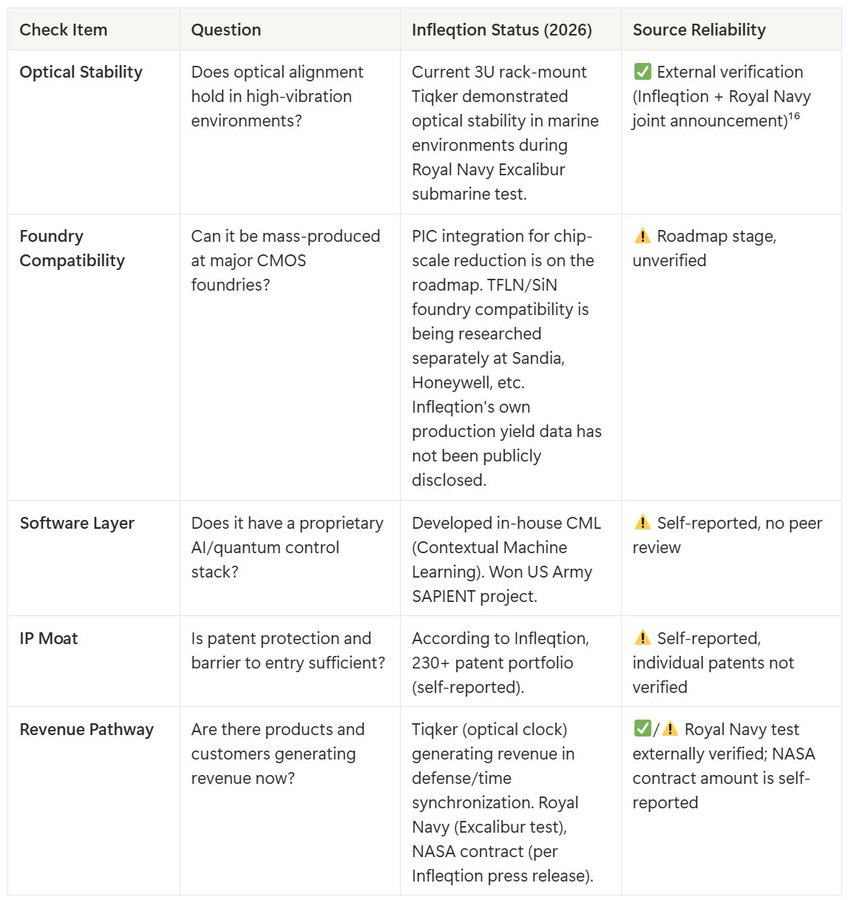
A Photonic Integrated Circuit (PIC) implements laser sources, modulators, and detectors on a single semiconductor chip. Infleqtion’s PIC integration strategy targets dramatic SWAP reduction — the critical path from the current 3U rack-mount Tiqker to a chip-scale module. However, this remains at the roadmap stage, and production compatibility and yields have not been publicly verified.
Material Innovation: Sandia National Labs demonstrated a PIC-compatible architecture using SiN waveguides for 1560 nm telecom light on-chip, with commercial off-the-shelf (COTS) components for frequency doubling to generate 780 nm to address Rb atoms.¹³ TFLN (Thin-Film Lithium Niobate) is a separate candidate material with strong electro-optic effects and broad transparency, being studied for potential integration as modulators in future quantum sensor PICs — however, no peer-reviewed demonstration of TFLN applied in a quantum sensor PIC has been confirmed to date.
Note: In practice, current PIC architectures typically handle 1560 nm (telecom C-band) light on-chip and use frequency doubling (e.g., PPLN) to generate the 780 nm light needed for Rb atoms — rather than guiding 780 nm directly through SiN waveguides, which suffers from significantly higher scattering loss (∝ 1/λ⁴).
Engineering Bottleneck: Visible-light PICs face severe scattering losses due to surface roughness at shorter wavelengths. Overcoming this is a critical future technical moat.
Phase 3: Killer Applications by Industry — From Space to the Seafloor
3.1 Quantitative Advantage of Quantum Inertial Navigation
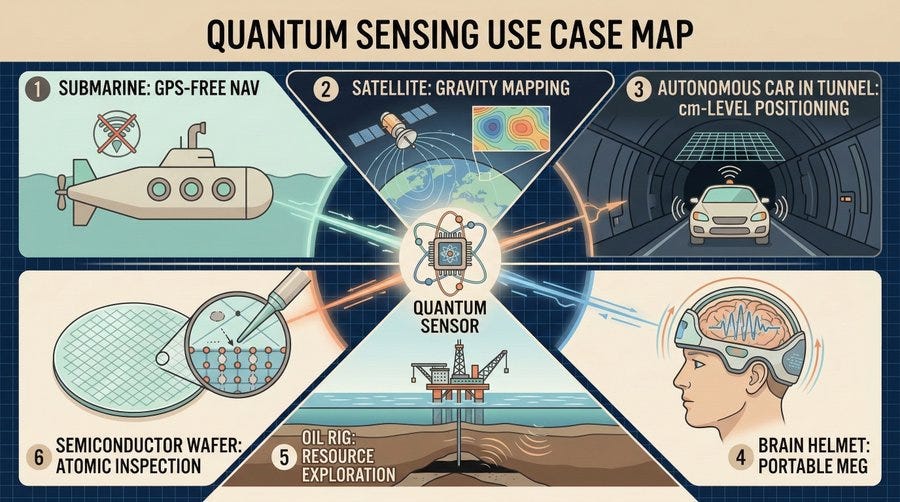
The most disruptive use case for quantum sensing is PNT in GPS-denied environments. GPS is vulnerable to jamming and spoofing, and entirely unavailable indoors or underwater.
ℹ️ What is drift rate (deg/hr)?
Inertial navigation sensors (IMUs) estimate current position by cumulatively calculating acceleration and rotation from a starting point. Tiny sensor errors snowball over time — this is “drift.” deg/hr measures how much directional error accumulates per hour. It’s like walking blindfolded: you start roughly straight, but gradually veer off course.
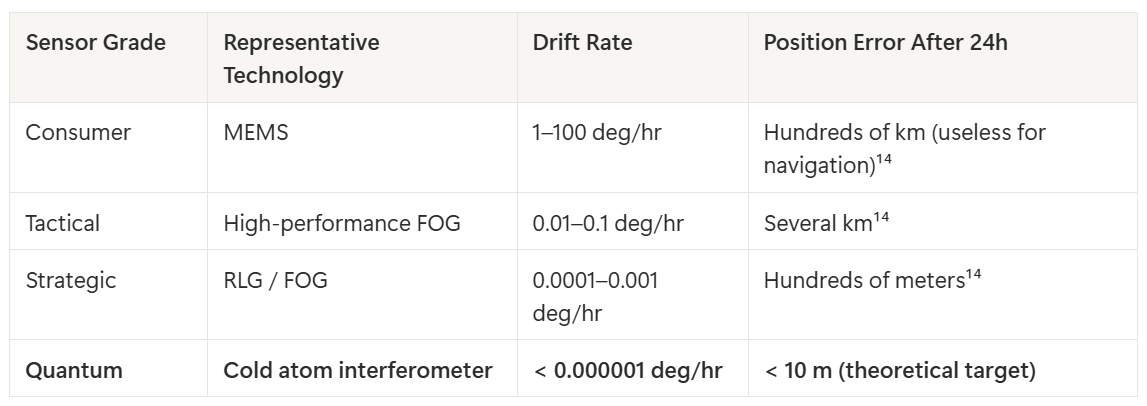
⚠️ The quantum row represents a theoretical target. No peer-reviewed publication has confirmed a cold-atom interferometer achieving this drift rate in field conditions. The closest real-world demonstration is the Q-CTRL flight test below.
✅ Verified Cases
US Naval Research Laboratory (NRL): The best currently deployed INS accumulates approximately 1 nautical mile (1.8 km) of error over 360 hours (15 days) of operation.¹⁵
Q-CTRL + SandboxAQ Flight Test (2025, Australia): An autonomous aerial vehicle combined SandboxAQ’s quantum magnetometer with Q-CTRL’s control software to achieve up to 50× higher accuracy than strategic-grade INS without satellite signals, according to Q-CTRL.³ (Note: Q-CTRL and SandboxAQ are separate companies from Infleqtion. Q-CTRL is a quantum control software firm based in Sydney, Australia. SandboxAQ is an AI+quantum company founded by former Google executives.)
Royal Navy Excalibur Submarine (Infleqtion): The Tiqker optical clock was the world’s first quantum optical clock deployed on an unmanned submarine, demonstrating long-duration GPS-free precision navigation.¹⁶
3.2 Other Key Applications
NASA Space Gravity Sensor: According to Infleqtion (company disclosure), they have secured a contract with NASA to send a quantum gravity sensor to space.⁴
Autonomous Driving: Centimeter-level absolute positioning is needed in tunnels, underground parking, and urban canyons. However, commercial civilian deployment is expected to take 5–10 years.¹⁰
Subsurface Resource Exploration: Atomionics’ ‘Gravio’ quantum gravimeter maps underground density variations from the surface, reducing expensive drilling operations.
3.3 What Is a ‘Quantum Map’? — Policy Risk
⚠️ A ‘quantum map’ is not a geographic map
The term “quantum map” intuitively evokes something like Google Maps, but it’s an entirely different concept.
Quantum map = A global physical-quantity reference database
Even if a quantum sensor measures gravity or magnetic fields, the measurement alone can’t tell you “where I am.” You need to match the measured value against pre-mapped reference data to infer location. This database is the “quantum map.”
Example: MagNav (geomagnetic navigation) exploits the fact that Earth’s magnetic field strength and direction vary subtly by latitude/longitude. A quantum magnetometer ultra-precisely measures the local magnetic field, then matches it against a geomagnetic map to determine position.
Why it’s a problem: Such high-precision physical data is directly tied to national security. If governments restrict data access for security reasons, commercialization could be limited to specific regions.
Note: Not all quantum sensing applications require a map. Atomic clocks (timing), magnetic microscopes (semiconductor inspection), and MEG (medical) derive value from absolute measurement values — they are independent of quantum maps. Quantum maps are only essential for gravity/magnetic-field-based navigation.
Phase 4: AI Integration — Turning Noise into Data
The greatest weakness of quantum systems is their extreme sensitivity to noise. But transforming this weakness into the strength of “ultra-high-sensitivity sensing” requires AI-based quantum control technology.³
4.1 Q-CTRL: Software Rescuing Hardware
Q-CTRL is a separate company from Infleqtion, headquartered in Sydney, Australia, specializing in quantum control software. It does not manufacture its own quantum sensor hardware — instead, it uses software to boost the performance of others’ hardware, operating a “platform-neutral” business model.
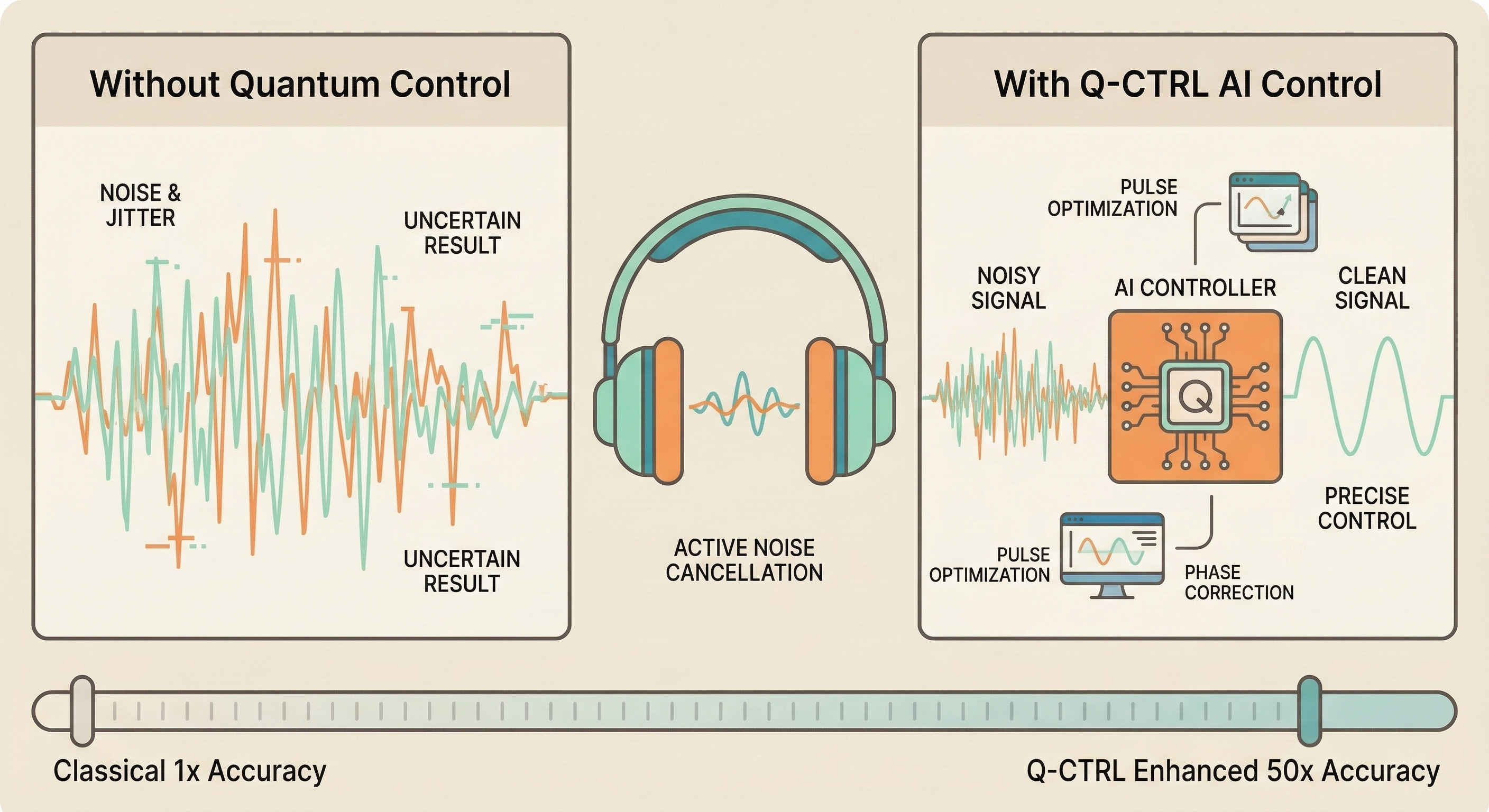
💡 Analogy: ‘Noise-Cancelling Headphones’
When you wear noise-cancelling headphones on a noisy airplane, engine noise disappears and only the music (the signal you want) comes through clearly. The headphones analyze ambient noise waveforms and generate precisely inverted waveforms to cancel them.
Q-CTRL applies the same principle to quantum sensors. AI algorithms optimize the shape of laser/microwave pulses applied to qubits in real-time, maximizing sensitivity to the target signal while cancelling environmental noise.
According to Q-CTRL, in the 2025 Australian flight test, they achieved up to 50× improvement in sensor accuracy through software alone, without hardware modifications.³
4.2 Infleqtion’s SAPIENT Project and CML
According to Infleqtion (company disclosure), they have secured a contract with the US Army for the SAPIENT (Secured AI for PNT) project. Contextual Machine Learning (CML) is described as Infleqtion’s proprietary AI technology designed to overcome limitations of Transformer models.
Extended context window: Optimized for analyzing long-term sensor signal trends
Edge AI implementation: Real-time sensor fusion even under GPS jamming/spoofing conditions
Note: Specific CML performance claims (e.g., “10× memory reduction vs. Transformers”) are Infleqtion’s own disclosures and have not been independently peer-reviewed.
Phase 5: Investment Framework — Top Picks, Competitive Landscape, Due Diligence
5.1 Top 3 Picks
5.2 Don’t IonQ, Rigetti, etc. Do Quantum Sensing?
ℹ️ Quantum Computing Pure-Plays vs. Sensing Companies: Strategic Divergence
IonQ (ion trap) and Rigetti (superconducting) are all-in on quantum computing. Their platforms are optimized to block external noise — the opposite design philosophy from sensing, which exploits noise.
IonQ’s ion trap technology could theoretically be used for sensing, but the company has not disclosed any sensing products or roadmap. Rigetti’s superconducting approach requires 15 mK cryogenic environments, making it impractical for field-deployable sensors.
What makes Infleqtion unique is pursuing both computing (Sqale) and sensing (Tiqker) on a single neutral-atom hardware platform.
5.3 Deep Tech Due Diligence Checklist
5.4 Catalysts and Risks
Revenue Catalysts
Semiconductor Inspection: Qnami’s NV center microscope non-destructively inspects magnetic defects in semiconductor chips. In advanced process nodes, yield improvement translates directly to enormous economic value.²
Medical Diagnostics: OPM or NV-center-based sensors enable miniaturization compared to superconducting MRI/MEG, potentially opening a portable brain scanner market.²
Investment Risks
Manufacturing Scalability: Mass-producing the precision “physics package” at semiconductor-like volumes is a core challenge.²
Quantum Map Standards Gap: International standardization of high-precision global databases needed for gravity/magnetic navigation remains incomplete.
Cost Barrier: Cold-atom systems cost approximately $2 million each, limiting adoption in cost-sensitive markets.⁸
Conclusion: The Era When Atoms Rescue Bits
Quantum sensing is the field that will prove “quantum advantage” in the real world first — before quantum computing arrives. Starting in 2026, this technology will generate revenue first in defense and space, then expand into industrial and consumer markets as miniaturization and cost reduction progress.
For investors, the most critical question is: “Who will miniaturize quantum hardware to chip-scale (PIC integration) and control it with AI software to create a ‘software-defined sensor’?”
Infleqtion’s Quantum Computing Roadmap
🟢 Beyond Sensing — The Sqale Processor
Infleqtion is not a sensing-only company. It is also actively pursuing quantum computing on the same neutral atom platform.
Sqale Roadmap (Infleqtion self-reported):
2026: Target 30 logical qubits
2030: Fault-tolerant system with 1,000+ logical qubits
Sensing revenue funding computing R&D is Infleqtion’s unique business structure.
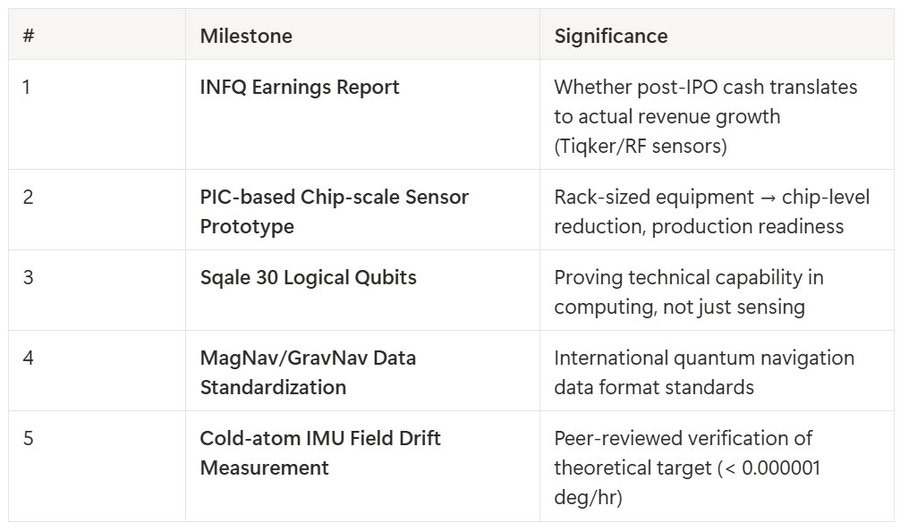
Key Milestones to Watch Over the Next 3 Years
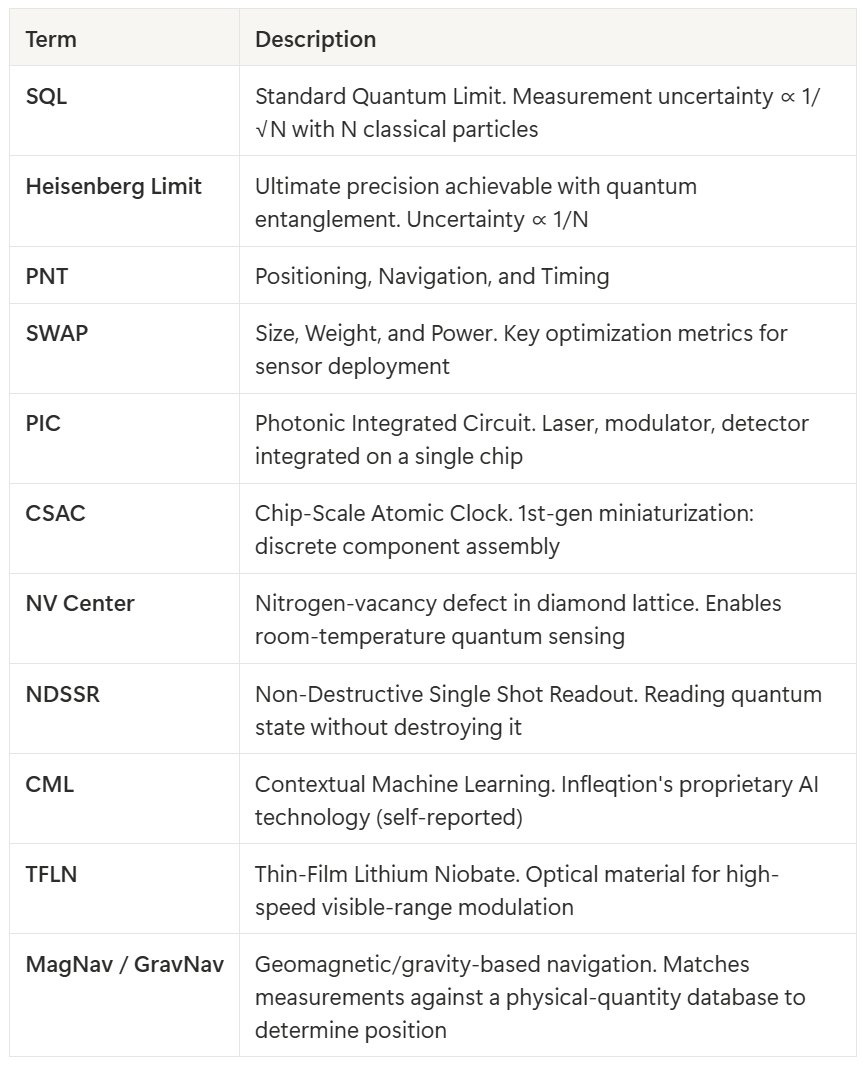
Appendix: Glossary of Technical Terms
References
Quantum Sensors vs. Quantum Computers: The Next 10 Years — IDTechEx. Link (Sensing vs. computing revenue comparison, commercialization timeline)
Quantum Sensors Market 2025-2045 — IDTechEx. Link (Market sizing, platform analysis, medical/semiconductor applications)
What is quantum control? — Q-CTRL. Link (Quantum control technology, 2025 flight test results)
Infleqtion — Leaders in Quantum Technology. Link (Company overview, Sqale roadmap, NASA contract — company disclosure)
A Truck-Borne System Based on Cold Atom Gravimeter — MDPI Sensors, 2022. Link (Actual cold-atom gravity sensor size: 52 cm diameter, 55 cm height, 70 kg)
Chip-Scale Atomic Clock — DARPA Innovation Timeline. Link (CSAC program: “100× size reduction, 50× power reduction” — no detailed specs)
Microchip Launches Next Generation Low-Noise CSAC — Microchip Technology. Link (SA65-LN specs: 0.5-inch package, < 300 mW, < 17 cm³)
Quantum Sensors Market — Mordor Intelligence. Link (Defense 41% market share in 2024, cold-atom system ~$2M per unit, market sizing)
The Global Market for Quantum Sensors 2025-2035 — Research and Markets. Link (”Market impact moderate through 2030, potential for significant acceleration thereafter.” Paid report, TOC only)
Understanding Quantum Sensing and Its Industrial Potential — The Quantum Insider, Mar 2026. Link (”Commercial deployment in autonomous vehicles or aviation will take 5–10 years”)
Quantum-Sensor Navigation Market Report 2026-2030 — GlobeNewswire/Research and Markets. Link (Quantum sensor navigation market: 2025 $0.89B → 2030 $2.49B)
Nitrogen-vacancy center — Wikipedia. Link (NV center physics fundamentals, room-temperature operation)
A compact cold-atom interferometer with a PIC-compatible laser system — Nature Communications 13, 5131 (2022). Link (1560 nm PIC laser → 780 nm frequency doubling to address Rb atoms. Sandia National Labs. Open access, peer-reviewed)
Inertial Measurement Unit: Essential Guide — Conoptics. Link (Consumer-to-strategic grade IMU drift rate classification)
NRL Charters Navy’s Quantum Inertial Navigation Path — US NRL. Link (Best current INS: 1 nautical mile error over 360 hours)
Infleqtion and Royal Navy: Quantum Optical Clock on Underwater Submarine — Infleqtion. Link (Tiqker world-first test on Excalibur unmanned submarine)
Disclaimer
The author holds a position in Infleqtion (INFQ) as of the time of writing and may buy or sell shares at any time without prior notice. This report does not constitute investment advice and is not a recommendation to buy or sell any security.
This report is written primarily from a technical perspective. Market analysis and investment framework sections were prepared with assistance from AI tools (Gemini, Claude, etc.). While fact-checking and reference verification were conducted throughout, inaccuracies or gaps may remain. Readers are strongly encouraged to verify all claims against original sources before making any investment decisions.