
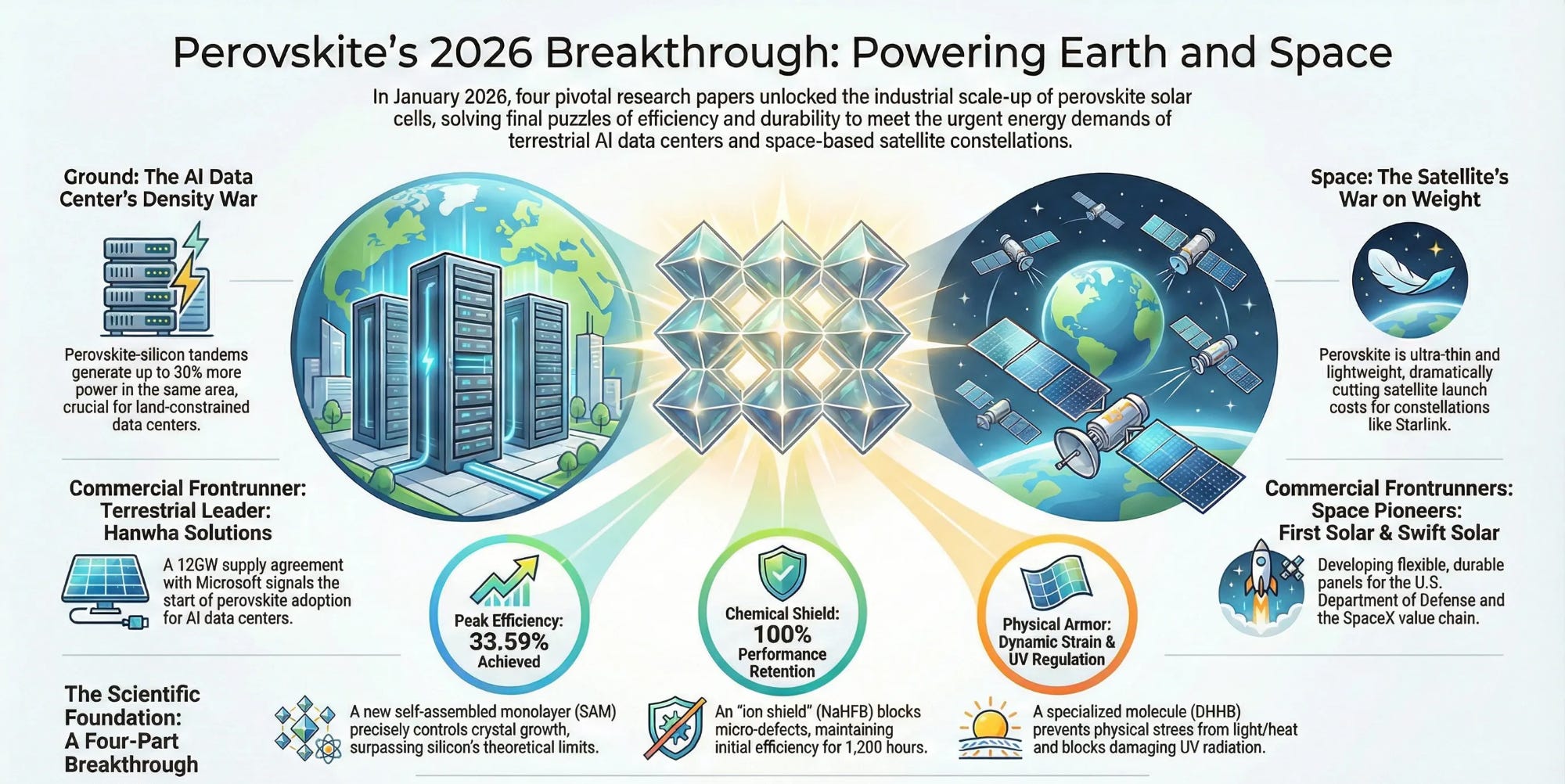
Nature Photonics’ January 2026 issue is nothing short of a perovskite special feature. https://www.nature.com/nphoton/volumes/20/issues/1
1. What is Perovskite?
Before diving into the 33% efficiency revolution, we must first understand the nature of this material. Perovskite is the name of a specific mineral, but in advanced science, it refers to a ‘unique crystal structure’.
Simply put, it’s a “solar cell capable of infinite transformation.” Just remember these three points:
(1) Structure: Composition Control Capability (Tunability)
Silicon is made by cutting ‘rock (silicon)’ found in nature. Its properties cannot be altered. But perovskite is a chemically synthesized material.
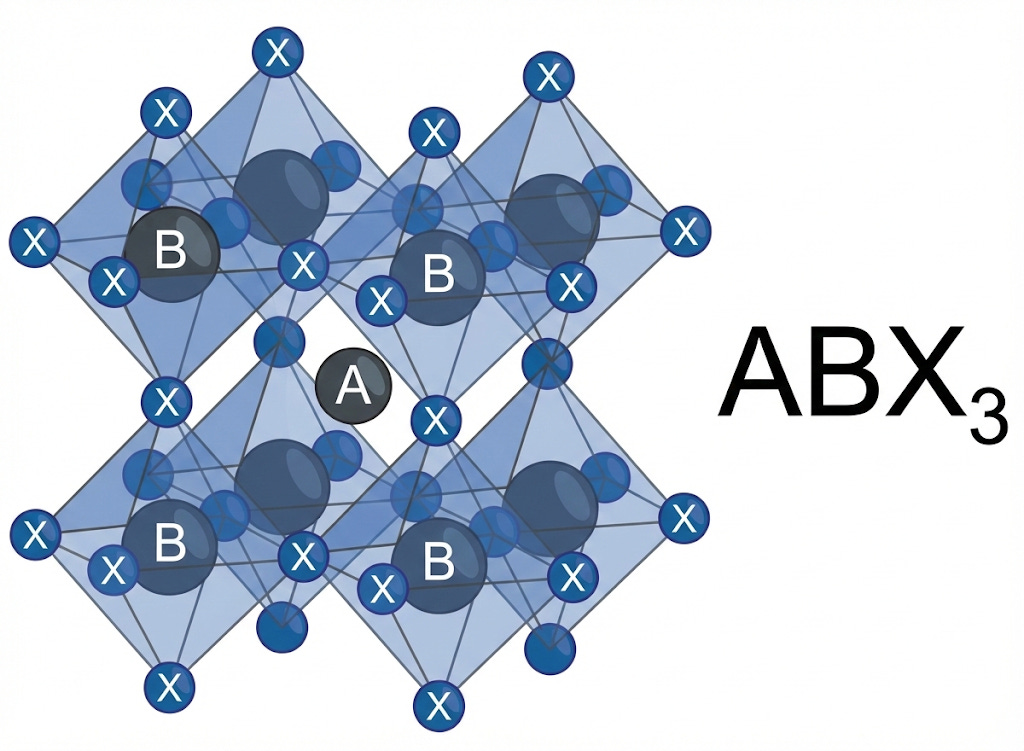
Principle: It possesses a unique Lego-like structure called ABX₃. By placing different elements (blocks) in the A, B, and X positions, you can freely sculpt its properties, saying things like “I’ll only absorb blue light” or “I’ll become transparent.”
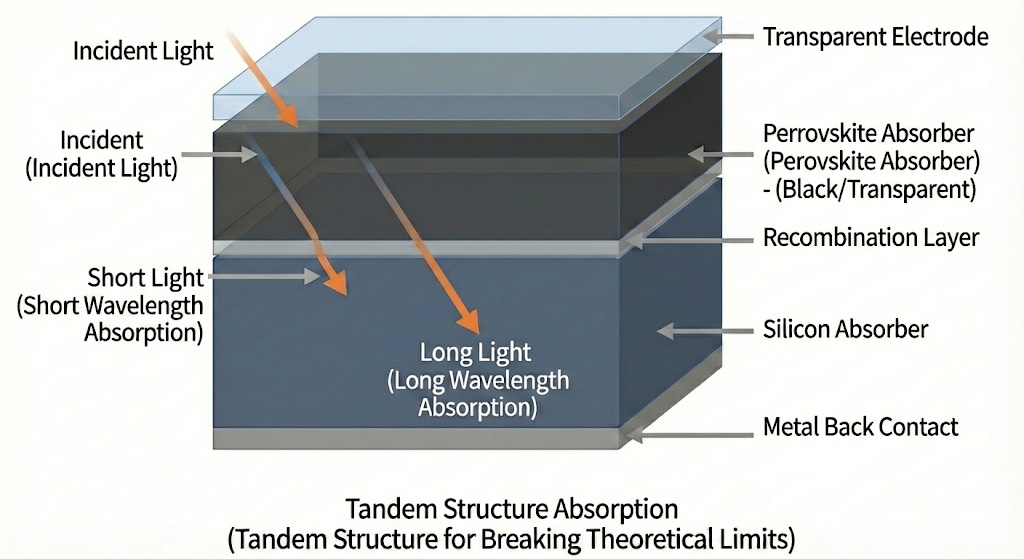
Why is this important?: This characteristic allows it to be tuned to selectively absorb light that silicon misses (like ultraviolet light). This is the core of Tandem technology.
(2) Form: Solution Processability
Silicon solar cells are heavy, rigid ‘sheets’ requiring high-temperature processes exceeding 1,000°C. Perovskite, however, is fundamentally different from the manufacturing stage.
Principle: Perovskite can be manufactured as a liquid ‘solution (ink)’. It can be produced by printing it onto plastic film or thin metal foils, much like printing a newspaper.
Physical Properties: This enables the creation of ‘ultra-light flexible panels’ that are over 100 times thinner than silicon, as light as paper, and bendable at will.
*Why is this ‘lightness’ a game changer?
Elon Musk, during a discussion with Jensen Huang at the US-Saudi Investment Forum last November, explained the economics of space-based AI data centers and emphasized thefollowing key condition:

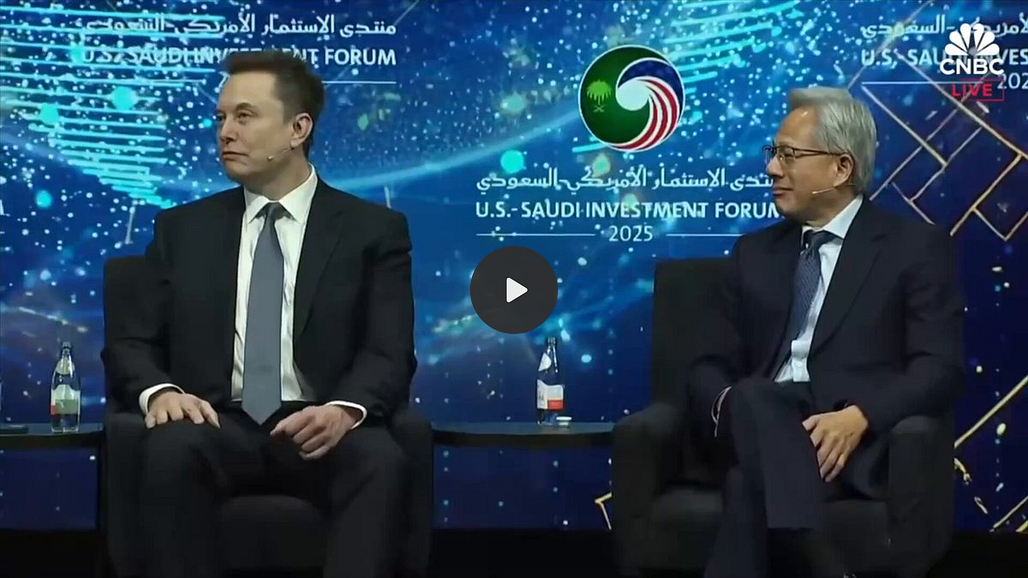
“Solar panels actually become cheaper because you don’t need glass or framing.”
Musk’s statement is the result of rigorous ‘First Principles’ thinking.
Earth’s enemies: gravity, wind and rain, humidity. Heavy tempered glass (shields) and metal frames (skeletons) are essential to withstand these.
Space’s enemies: zero gravity and vacuum. There’s no need to support weight or block rain. In space, glass is merely ‘excess mass’ that eats into expensive launch costs.
Conventional silicon-based panels are too fragile to meet this challenge, but flexible perovskite film is the only alternative that can perfectly perfectly suited for the challenge.
(3) Properties: Defect Tolerance & Self-Healing
Conventional silicon solar cells are difficult to repair. When strong cosmic radiation particles strike silicon crystals, they leave permanent ‘scars’ (defects), which immediately lead to efficiency loss. Repairing them requires high-temperature processing above 200°C, which is impossible in orbit.
However, perovskite overcomes this by simultaneously possessing the unique properties of ‘Defect Tolerance’ and ‘Self-Healing’. This signifies a fundamental paradigm shift in how materials withstand and recover from external impacts.
Defect Tolerance: Even when defects form within the crystal during manufacturing or due to external impacts, perovskite exhibits minimal performance degradation. Unlike silicon defects, which become ‘deep traps’ that block electron flow, perovskite defects are mostly ‘shallow traps’ from which electrons can easily escape, or are generally harmless to performance.
Self-Healing: Intense cosmic radiation can destroy solar cell structures, causing permanent damage. However, perovskite possesses a flexible ‘soft lattice’ structure. This allows internal ions to migrate (Ion Migration) to damaged areas, self-repairing by filling defects. This is a strength optimized for space environments. Particularly, the ‘dark’ periods when satellites enter Earth’s shadow or subtle thermal cycles aid ion rearrangement. In other words, through a cycle of generating power during the day and restoring structure at night, it can maintain long-term performance in the irreparable space environment.
2. The Event: January 2026, Nature Photonics’ Unprecedented Occurrence
It is rare for a specific technology to dominate an entire issue of a major academic journal. Yet, the January 2026 issue of Nature Photonicswas effectively a ‘Declaration of Perovskite Industrialization’. The four papers published in this issue each achieved, in different ways, the “peak of efficiency” and the “extreme of durability.” (This part is my attempt to weave the four papers together for easier understanding.)
Like a single grand project, the four-stage puzzle – ‘Efficiency Breakthrough (Tandem)’ → ‘Strategy Development (Review)’ → ‘Chemical Defense (Chemical)’ → ‘Physical Defense (Physical)’ – has been perfectly assembled.
(1) Efficiency Breakthrough: 33.59% Tandem (The Breakthrough)
The most shocking news is achieving an efficiency of 33.59%, far surpassing silicon’s theoretical limit (29%).
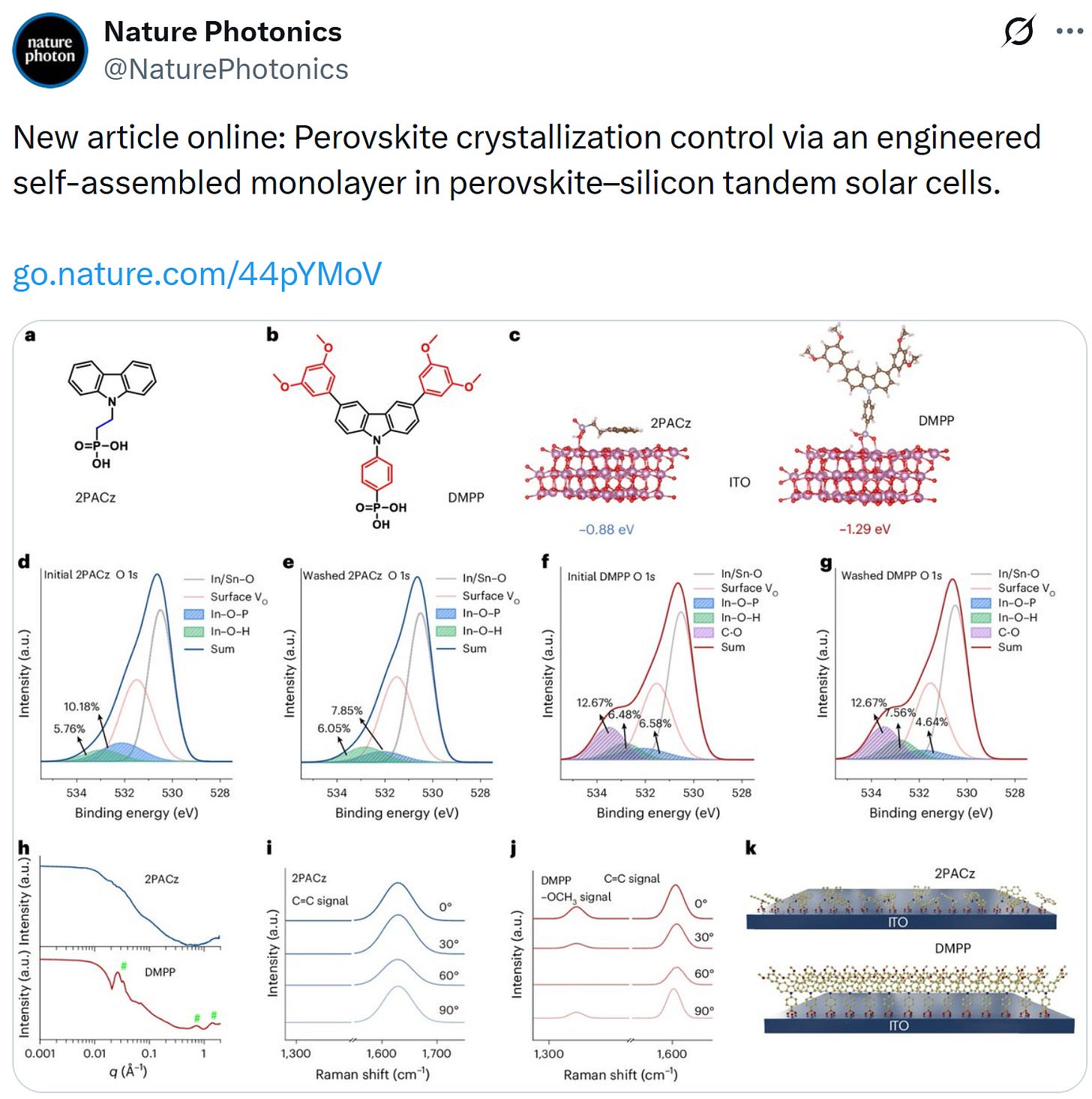
Paper: Perovskite crystallization control via an engineered self-assembled monolayer... (Zhang et al.)
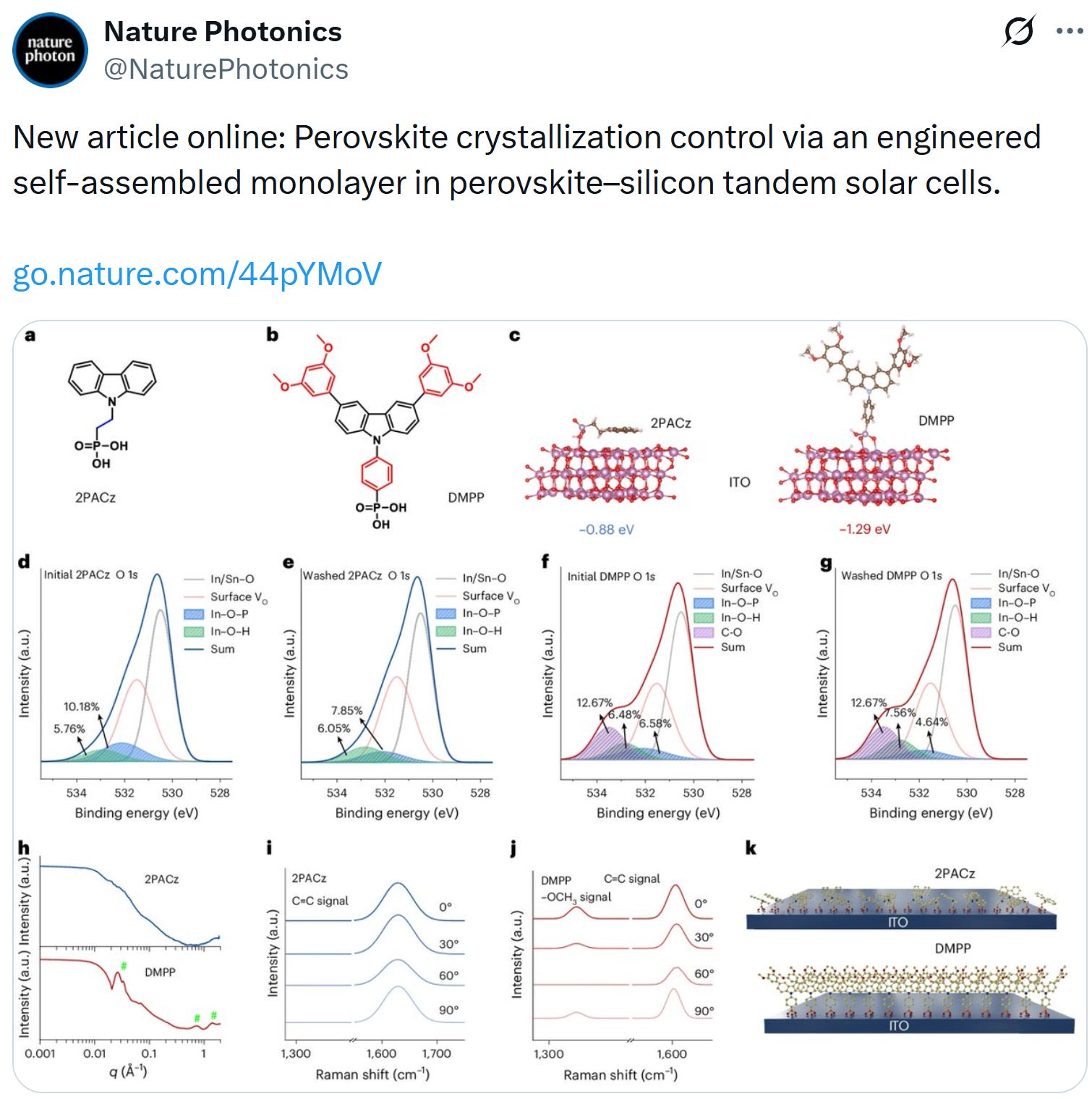
Key: The researchers developed a custom self-assembled monolayer (SAM) called DMPP*. Its molecular arrangement is vertically aligned compared to the standard material (2PACz), enabling better charge extraction.
*DMPP: [4-(3,6-bis(3,5-dimethoxyphenyl)-9H-carbazol-9-yl)phenyl]phosphonic acid
Details:
Efficiency: Certified efficiency of 33.59% (Lab 33.86%) in a 1cm² device.
Large Area: Achieved a certified efficiency of 28.53% even at 16cm², demonstrating mass production feasibility.
Stability: After undergoing the same thermoplastic polyolefin encapsulation process used in industrial settings, it passed MPP (Maximum Power Point) tracking tests exceeding 2,000 hours under harsh 1-sun continuous illumination. As a result, it maintained over 90% of its initial efficiency, demonstrating long-term reliability comparable to silicon solar cells.
(2) Strategy Development: A Guidebook for Commercialization
This review paper goes beyond simple research results to present a ‘blueprint’ for industry to follow.
Paper: Interlayer engineering in metal halide perovskite photovoltaics (Shin, Park, Noh & Seok)
Core (Interlayer): Professor Seok Sang-il’s team, leading experts in perovskite, defined in this paper that “the interlayer between materials, rather than the materials themselves, determines lifetime and efficiency,” comprehensively outlining interface design strategies for commercialization.
“This Review examines the evolution of these ILs, from simple passivation layers to multifunctional components that regulate electric fields and carrier dynamics. We highlight recent advances in materials and architectures, classify ILs by their device position and discuss design strategies inspired by mature photovoltaic technologies. We argue that interfacial IL engineering is crucial to radiative efficiency and stable, high-performance perovskite solar cells.”
(3) Chemical Stability
The reason it’s “chemical”: It chemically blocks ion movement internally while strengthening ionic bonding through the material (NaHFB). “The researchers named the protective layer formed by this material the ‘Ion Shield’.”
Paper: Stabilizing high-efficiency perovskite solar cells via strategic interfacial contact engineering... (Li et al.)
Core (NaHFB): Sodium heptfluorobutyrate (NaHFB) was used to form an ‘Ion Shield’ on the perovskite surface. This chemically fills surface defects (Passivation) and prevents internal ions from leaking out.
Details: This technology achieved a certified efficiency of 26.96% and **maintained 100%**of its initial performance without efficiency degradation over 1,200 hours.
(4) Physical Stability
The reason it’s “physical”: It relieves the ‘physical force (strain)’ that causes the material to warp when exposed to light or heat, and it performs optical defense by blocking light (UV).
Paper: In situ dynamic regulation of strain at the buried interface... (Zhang et al.)
Core (Strain & UV): DHHB molecules were introduced to dynamically relieve strain at the buried interface, enhancing mechanical durability. Simultaneously, they act as a physical filter, shielding against ultraviolet (UV) light, the enemy of solar cells.
Content: Achieved 26.47% efficiency and demonstrated outstanding stability even under day-night cycling conditions.
3. The Two Pillars: Why this technology is essential for both Earth and Space?
This technology garners explosive interest because it simultaneously addresses the ‘critical weaknesses’ of two entirely different markets: Ground (AIDC) and Space.

🌍 Ground: AIDC’s “Density Revolution”
Meta recently announced plans to build a data center in rural Louisiana costing over $10 billion ($10B+). This is specifically for ‘AI Training’. Since training is a self-contained process requiring less real-time responsiveness, it can be moved to outlying areas with cheaper land and electricity.
However, real-time services provided by Google or Microsoft (ChatGPT, search) involve ‘AI Inference’. For immediate interaction with users, latency must be minimized, making it impossible to abandon locations near urban centers or traffic hubs (Edge). (e.g., Microsoft Azure’s ‘Edge Zone’)
Problem (Land Dilemma): AI servers consume electricity like water. To power them with existing silicon panels (20% efficiency), vast land areas are required. Yet securing such land near urban centers—where ‘inference-focused AIDC’ must be located due to latency criticality—is nearly impossible.
Solution (Lower LCOE): This is precisely where the 33.59% tandem technologyfrom Paper ① shines. It enables approximately 30% morepower generationfrom the same land area.
Land cost reduction: The land area required to produce the same amount of power is reduced by 30%.
Installation Cost Reduction: Costs for supporting structures and balance-of-system (BOS) wiring are also dramatically reduced. This directly translates to a decrease in the Levelized Cost of Electricity (LCOE*).
Impact: Hanwha Solutions’ 12GW contract with MS is more than just greenwashing. It represents the convergence of MS’s strategic need to maximize power output even on limited urban sites and Hanwha’s high-efficiency tandem technology.
*LCOE: Levelized Cost of Electricity
🚀 Space: Starlink’s “Weight Revolution”
On Earth, if electricity is scarce, you just build more power plants. In space, it’s a different story. The biggest enemy of Elon Musk’s dream of a ‘space-based AI empire’ isn’t budget or technology, but ‘physics (Gravity & Weight)’.
Problem (Launch Cost): The weight and volume a rocket can carry are limited. Traditional rigid silicon panels are heavy and non-foldable, taking up significant space. This is critical when launching 1kg into space costs thousands to tens of thousands of dollars.
Solution (Cost Reduction): Perovskite is ‘Flexible’.
Rollable: It can be rolled up like a mat and loaded onto a rocket. This dramatically reduces its volume.
Ultra-lightweight: Using plastic or thin metal films instead of glass substrates reduces weight to 1/10th.
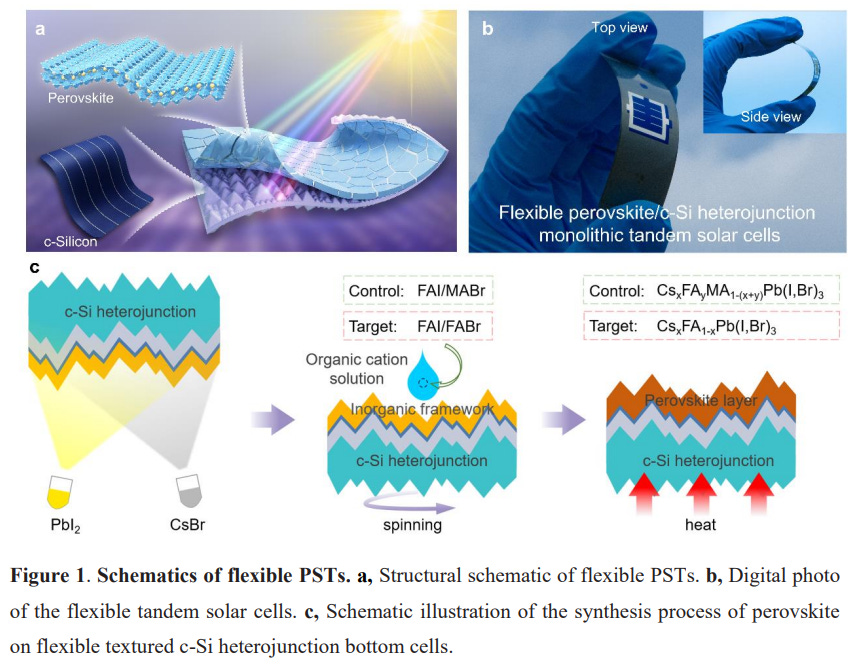
Image taken from: https://arxiv.org/pdf/2504.20760(Nature Communications16.1 (2025))
Why Now?: Thanks to the chemical/physical durability (UV blocking, thermal shock resistance) verified in papers (3), (4), it is now lightweight yet capable of withstanding the harsh environment of space. If Musk adopts this technology for Starlink, it would allow for increased computational equipment (GPUs) per satellite.
4. Corporate Analysis: Who is commercializing this technology?
Companies converting the paper’s four core technologies (DMPP, interface control, NaHFB, DHHB) into actual products will lead the market.
[Tier 1] Ground: Mass Production
Hanwha Solutions (009830.KS):
Alliance with MS: The 12GW solar module supply contractsigned with Microsoft (MS) is likely to involve supplying high-efficiency tandem panels, which are advantageous for AIDC power grids, especially urban AIDC.
Technical Capability: A tandem cell pilot line is operational at the Jincheon, Chungcheongbuk-do factory, targeting mass production by 2026. It has achieved 28.6% efficiency on a large-area (M10) basis and completed mass production preparations.
[Tier 2] Space: Niche Tech
First Solar (FSLR.US): A leader in thin-film technology, it combines tandem technology (acquired through Evolar) to simultaneously target U.S. Department of Defense and AIDC demand.
Swift Solar (Unlisted): As a U.S. Department of Defense (DoD) partner, it is applying the technology from this paper (flexibility + durability) to actually test ‘flexible panels for space use’. It may be possible to enter the SpaceX value chain.
5. See the ‘Expansion’ of the Technology
In January 2026, Nature Photonicsannounced the completion of “high-efficiency solar cells for terrestrial use.” However, it’s worth noting that this technology is expanding beyond terrestrial data centers toward space-based data centers.
Fundamental: 33.59% efficiency (Paper (1)) and quadruple defense layers (Papers (2), (3), (4)) have been verified.
Application: Hanwha Solutions applied this to AIDC (ground-based) to secure economic viability, while the space industry will apply it to Starlink (space-based) to maximize launch efficiency.
6. Conclusion
We may now be at the inflection point where perovskite transitions from a ‘theme stock’ to an ‘earnings stock’. This technology is not merely a substitute. It is the only technology capable of overcoming the limitations of ‘space’ and ‘weight’ that existing silicon cannot resolve.
7. References
https://gulfnews.com/technology/unfiltered-elon-musk-and-jensen-huangs-cosmic-power-play-1.500353222
Mosquera-Lois, I., Huang, YT., Lohan, H. et al. Multifaceted nature of defect tolerance in halide perovskites and emerging semiconductors. Nat Rev Chem 9, 287–304 (2025). https://doi.org/10.1038/s41570-025-00702-w
Shin, S.S., Park, Bw., Noh, J.H.*et al.*Interlayer engineering in metal halide perovskite photovoltaics.*Nat. Photon.*20, 11–23 (2026). https://doi.org/10.1038/s41566-025-01809-8
Zhang, D., Yan, B., Xia, R.*et al.*Perovskite crystallization control via an engineered self-assembled monolayer in perovskite–silicon tandem solar cells.*Nat. Photon.*20, 40–48 (2026). https://doi.org/10.1038/s41566-025-01778-y
Li, G., Zhang, Z., Agyei-Tuffour, B.*et al.*Stabilizing high-efficiency perovskite solar cells via strategic interfacial contact engineering.*Nat. Photon.*20, 55–62 (2026). https://doi.org/10.1038/s41566-025-01791-1
Zhang, J., Yan, W., Li, Z.*et al.*In situ dynamic regulation of strain at the buried interface of stable perovskite solar cells.*Nat. Photon.*20, 119–127 (2026). https://doi.org/10.1038/s41566-025-01808-9


Sun, Y., Li, F., Zhang, H.et al.Flexible perovskite/silicon monolithic tandem solar cells approaching 30% efficiency.Nat Commun16**, 5733 (2025). https://doi.org/10.1038/s41467-025-61081-w
https://qcells.com/kr/stay-in-the-loop/trending-news-detail?newsId=NEW241219083156003
https://www.hanwha.co.kr/newsroom/media_center/news/news_view.do?seq=13887
https://www.hanwha.co.kr/newsroom/media_center/news/news_view.do?seq=13178
I don’t disagree with you on the technical aspects, but Hing Shing Leung can tell you why photovoltaics as a sector is plainly uninvestable.